ServicesSecurity Window Film
Security Window Film in West University Place
Security window film is a thick, clear polyester layer applied to the inside of your glass. When a pane breaks, the film holds the pieces together and slows anyone trying to get through. We check each window's glass and frame first, so the film goes where it actually helps.
What security film does, and what it does not
Standard window tint is thin and built to manage heat and glare. Security film is several times thicker, with layered polyester and a stronger adhesive. When glass is struck, the film keeps the shards held together on the adhesive instead of letting them fall into the room. A person trying to break in has to keep hitting the same spot, which takes time and makes noise.
Film alone does not make glass unbreakable, and we will not tell you it does. A filmed pane can still be pushed out of its frame as one sagging sheet. That is why we look at the frame, the glazing beads and the glass type before recommending anything. On the openings that matter most, an edge attachment system ties the film to the frame so the whole assembly resists being pushed in.
Many people also want the film for safety rather than security. Annealed glass breaks into long, sharp pieces, and film keeps those pieces from flying when a door slams, a ball hits a window or storm debris strikes the glass.
What the work includes
Glass and frame check
We identify whether each pane is annealed, tempered or laminated, single or dual pane. We also look at frame material and how the glass is held in. These details decide which film and attachment make sense.
Film thickness matched to the opening
A small upstairs window does not need the same film as a glass patio door beside a lock. We specify thickness per opening instead of one film for the whole house.
Edge attachment where it counts
For doors, sidelites and hidden ground-floor windows, we can add a structural attachment that bonds the film edge to the frame. This is what keeps a broken pane from being pushed in as a sheet.
Clear or tinted options
Most security film is optically clear and blocks nearly all UV light. If you also want heat rejection or glare reduction, we can recommend a tinted security film or pair it with ceramic film elsewhere in the house.
Clean install and cleanup
We protect sills and floors, clean the glass edge to edge, and remove all trimmings and wet towels when we leave.
Signs security film is worth a look
Glass next to a lock
Sidelites, French doors and glass entry doors let someone break a pane and reach the deadbolt. Filmed and attached glass makes that a slow, loud job.
Windows out of sight from the street
Back and side windows hidden by fences or landscaping give an intruder time to work. These are often the openings we prioritize.
Storm season worries
Gulf Coast hurricane season brings wind-driven debris. Film will not replace shutters, but it helps keep broken glass from spraying into living spaces.
Large annealed panes in busy rooms
Older picture windows and patio doors may not be tempered. If kids, pets or customers move near that glass, film reduces the injury risk from a break.
A past break-in or attempt
If someone has already tried a window or door, we look at how they approached it and reinforce that opening and any others like it.
How a security film job runs
- 1
Walkthrough by phone and in person
We start with what you are worried about, then walk the property and check each window's glass type, frame and condition. You hear plainly which openings are true weak points and which are not.
- 2
Written recommendation
You get a line-item plan listing film type, thickness and any attachment for each window, so you can choose what to do now and what can wait.
- 3
Prep on install day
We move nearby items, lay down drop cloths and scrape the glass clean to remove paint specks and residue. Debris trapped under thick film shows as bubbles, so this step takes real care.
- 4
Application and attachment
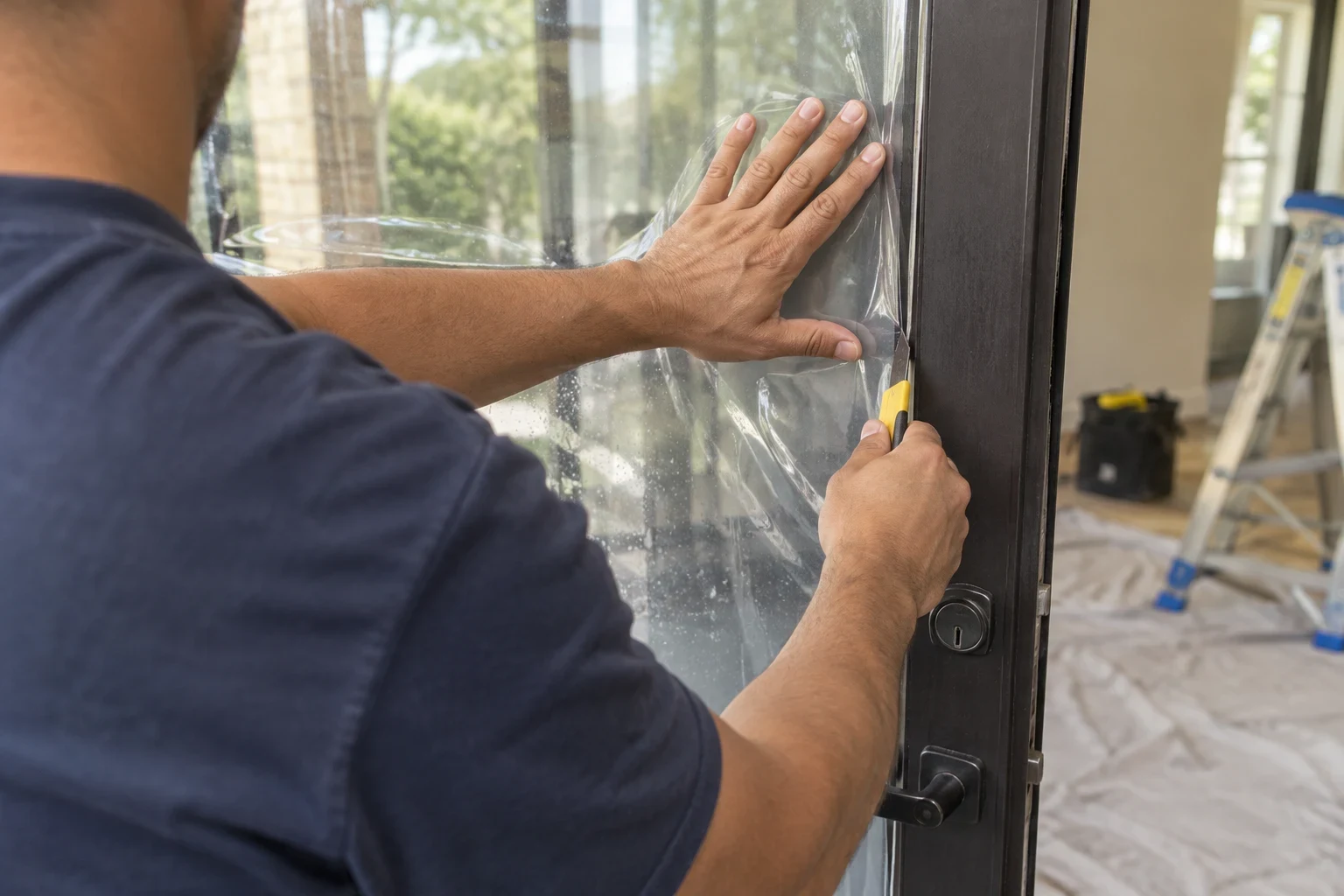
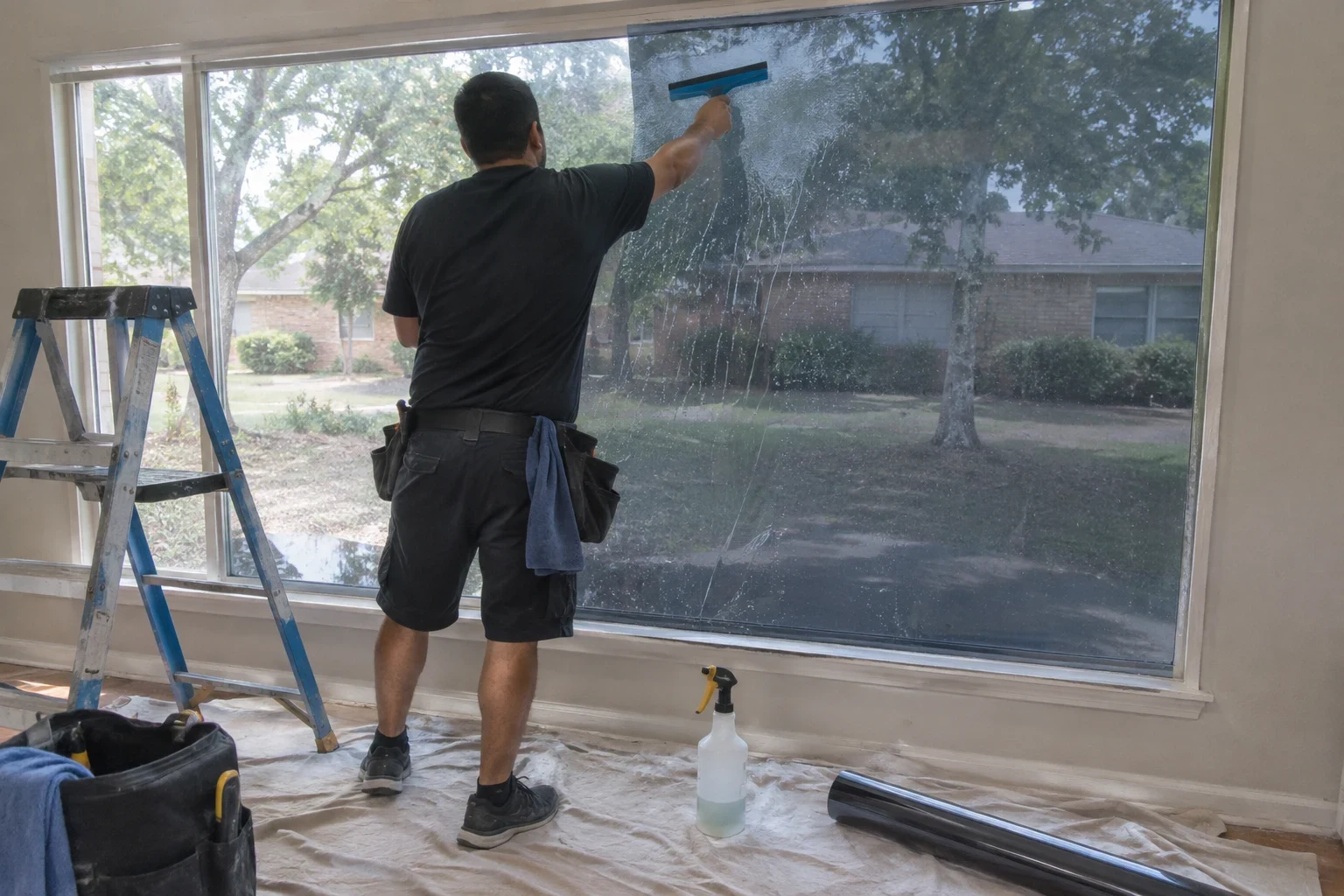
Film is applied wet, squeegeed to push out solution and trimmed close to the frame edge. Where specified, the attachment bead or anchor is installed along the frame after the film sets.
- 5
Cure and final check
We walk each window with you and explain cure time. Slight haze or small water pockets are normal and clear as the film dries.
What moves the price of security film
Security film is priced by the window, not by a flat house rate. The biggest swings come from film thickness and whether an opening gets an attachment system. Your free quote by phone and the written plan after the walkthrough list each of these so there is nothing unexplained.
- Film thickness
- Thicker film uses more material and is stiffer to install, especially on large panes.
- Attachment system
- Edge attachment adds materials and labor along every side of the frame, so we recommend it only where the opening needs it.
- Number and size of panes
- Many small divided lites take more trimming time than a few large sheets of glass.
- Access and condition
- Tall windows over stairs, heavy built-ins or old film that must be stripped and cleaned first all add time.
Security film questions
Something not covered here? (713) 903-7407
Will security film stop a burglar from getting in?
It will not make a window impossible to get through. It holds broken glass together and forces repeated strikes, which buys time and makes noise. Most intruders want a fast, quiet entry, so a delay is often enough to make them move on. Pairing film with an attachment system on key openings makes it considerably harder.
Can I tell the film is there?
Clear security film is very hard to spot once cured. Up close you may see a thin edge line near the frame. If an attachment bead is used, it shows as a narrow line of sealant along the frame that can be color-matched.
Can it go on dual-pane windows?
Usually, yes. We check the glass type and the size of the pane, because some films raise glass temperature and can stress certain dual-pane units. Clear security film absorbs little heat, but we confirm the combination before installing.
How long before I can clean the windows?
Give the film about 30 days to cure fully, longer in cool or humid weather. After that, clean with a soft cloth and a mild, non-ammonia cleaner. Avoid razor blades and abrasive pads on the filmed side.
Can I get security and heat control together?
Yes. Some security films include a tint layer for heat rejection and glare reduction. Another option is clear security film on doors and ground-floor windows with ceramic window film on sun-facing glass upstairs. We will lay out both choices during your consultation.
Find out which windows need it
We will check your glass and frames, tell you where security film makes a real difference, and give you a written plan. The consultation is free.