ServicesCeramic Window Film
Ceramic Window Film in West University Place
Ceramic window film uses non-metallic nano-ceramic particles to block a large share of infrared heat and nearly all UV, while the glass stays clear. We start by finding which windows are actually heating your rooms, then match the film to that glass.
What ceramic film does and when it is the right choice
Most of the heat you feel through a window is infrared light, not the visible light that brightens a room. Ceramic film is built to separate the two. Its nano-ceramic layer absorbs and rejects infrared while letting much of the visible light through, so a room can feel noticeably cooler without looking dim. Because there is no metal in the film, it does not rust at the edges, does not block phone or Wi-Fi signals and does not give the glass a mirror finish.
It is the right call when you want heat rejection and UV protection but do not want to change how the house looks from the street or how bright the rooms feel inside. If privacy is the main goal, our privacy window tinting may fit better. If you want maximum heat rejection and do not mind some shine, reflective window film is worth comparing.
Before we recommend any film, we check the glass itself. Single-pane, dual-pane and low-E glass absorb heat differently, and the wrong film on the wrong glass can stress it. Getting that right first is what keeps the result working for years.
What our ceramic film installation includes
Window-by-window heat check
We note which walls face the afternoon sun, which rooms run warm and what kind of glass is in each frame. Often only a few windows are causing most of the heat, and treating those first can solve the problem.
Glass compatibility review
We identify single-pane, dual-pane, tempered and low-E glass and check for failed seals. Ceramic film absorbs some energy, so large dual-pane units need a film rated for that glass to avoid thermal stress cracking.
Film samples at your windows
We hold sample pieces against your actual glass so you can see the shade and clarity in your own light. Visible light transmission numbers on a spec sheet are hard to picture until you see them in the room.
Careful prep and installation
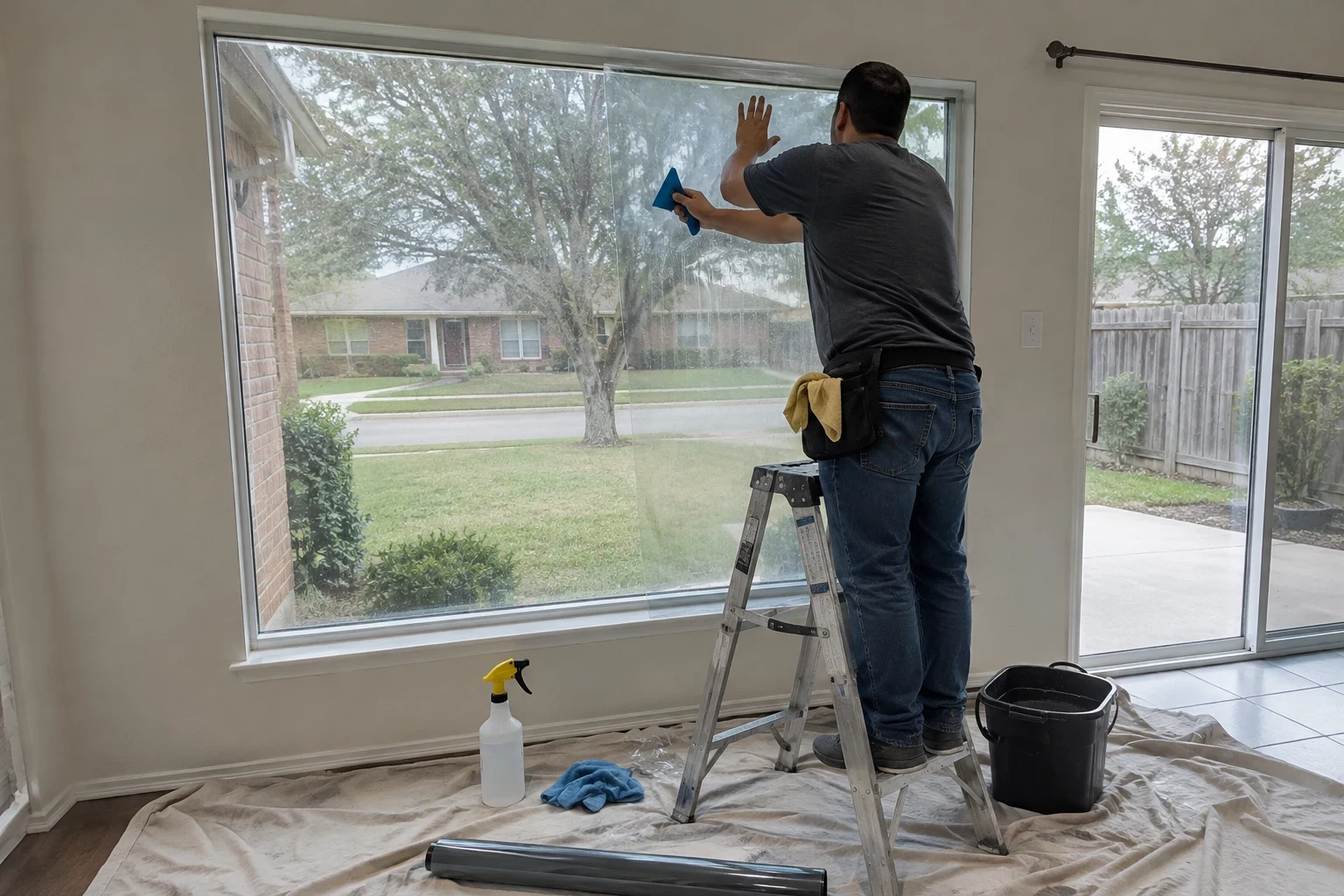
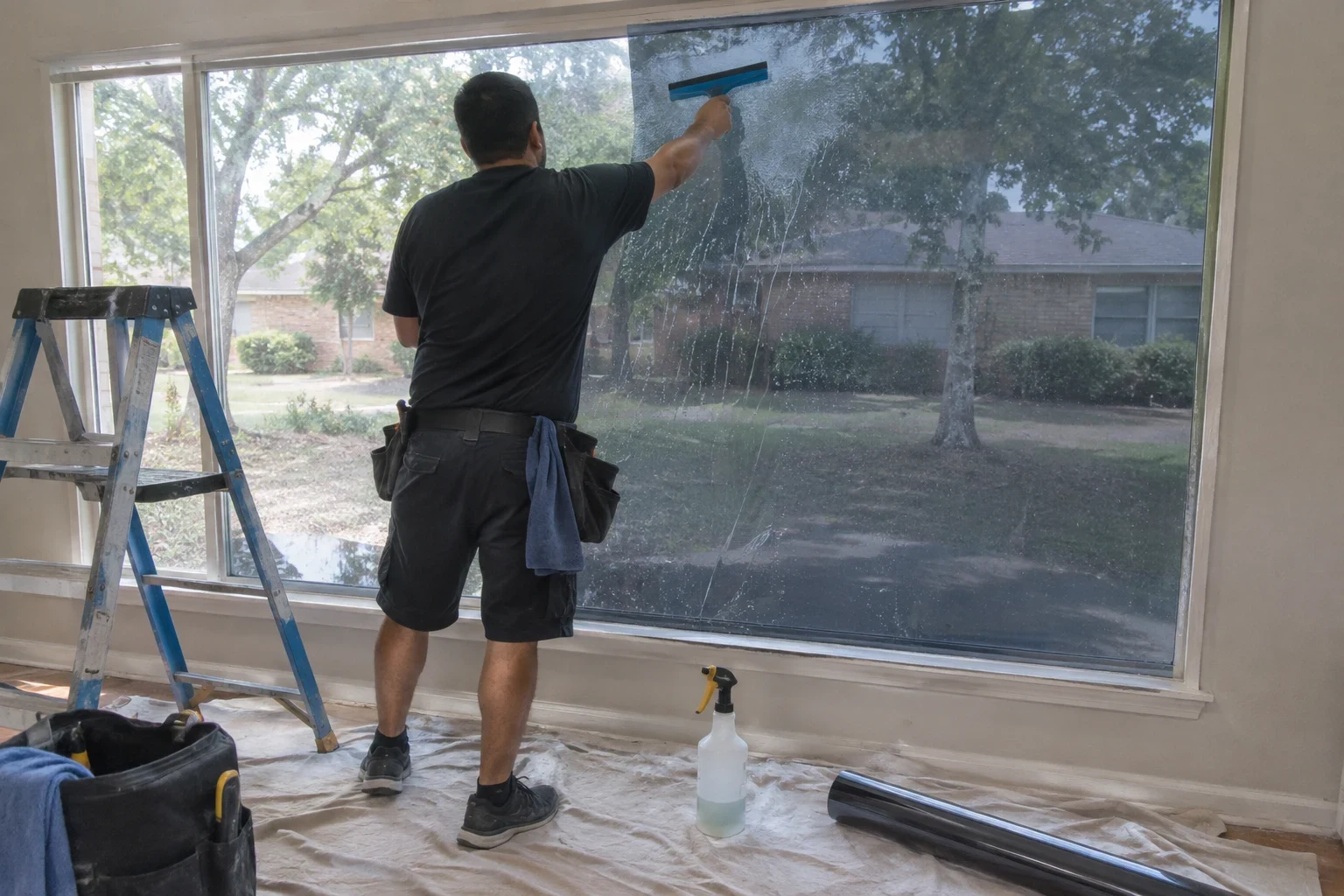
Glass is scraped and cleaned to remove paint specks, mineral spots and old adhesive. Film is cut to fit with a small, even gap at the gasket and squeegeed to push out the mounting solution.
Cleanup and care instructions
We protect sills and flooring with drop cloths, wipe down frames when we finish and walk you through how long to wait before cleaning the film and what to use.
Signs ceramic window film could help
Rooms that stay hot after the AC cycles
If one room runs several degrees warmer than the rest of the house, sun through the glass is a common cause. Ceramic film reduces the infrared load so the system is not fighting the same windows all afternoon.
Faded floors, rugs and furniture
UV light breaks down dyes and finishes. Ceramic film blocks nearly all UV, which slows fading on wood floors, upholstery and artwork near the glass.
Glare without wanting darker rooms
You want to see a screen or read near the window but do not want the house to feel like a cave. A lighter ceramic film cuts glare while keeping most of the daylight.
Poor cell signal after past tinting
Older metallized films can weaken phone reception indoors. Replacing them with a non-metallic ceramic film removes that problem.
Old film that is purple or bubbling
Cheap dyed film breaks down in strong sun and turns purple or blisters. We remove it, clean off the adhesive and install ceramic film that holds its color.
How the job goes
- 1
Phone consultation
You tell us which rooms are the problem and what you want to keep, such as the view or the daylight. We ask about the glass and the window sizes so the visit is focused.
- 2
On-site assessment and quote
We look at each window, confirm the glass type, show samples and explain which film grade fits each opening and why. You get a written quote listing the windows and the film for each one.
- 3
Installation day
We move small items away from the windows, lay drop cloths, clean the glass and install the film. Most homes are finished in a single visit, and you can stay in the house while we work.
- 4
Curing and follow-up
For the first days you may see small water pockets or light haze as the mounting solution dries out through the film. That is normal, and in the Houston-area heat it usually clears faster. If anything looks wrong after curing, we come back and check it.
What moves the price of ceramic film
Ceramic film costs more per square foot than dyed film because of the particles that do the heat rejection. The total for your home depends mostly on how much glass we cover and what condition it is in. We price each window on the quote so you can choose which ones to treat.
- Total glass area
- Square footage is the biggest driver. Treating only the sun-facing windows can cut the total a lot without giving up much comfort.
- Film grade and shade
- Ceramic lines come in several heat rejection levels and visible light shades. Higher-performance grades cost more, and we will tell you when a lighter, less expensive grade does the job.
- Old film removal
- Stripping failed film and its adhesive takes time, especially when the adhesive has baked onto the glass. Clean glass costs less to prepare.
- Window shape and access
- Divided-lite French doors, arched transoms and tall two-story windows take more cutting and ladder work than large flat panes.
Ceramic window film questions
Something not covered here? (713) 903-7407
Will ceramic film make my rooms darker?
Only as much as you choose. Ceramic film comes in light shades that keep most of the visible light while still rejecting a large share of infrared heat. We show samples on your glass so you can judge it before deciding.
How is ceramic film different from dyed or metallic film?
Dyed film absorbs heat with dye that fades over time. Metallic film reflects heat but adds shine and can interfere with phone signals. Ceramic film uses non-metallic particles that hold up in strong sun, stay low-reflective and do not block signals.
Is ceramic film safe on dual-pane or low-E windows?
In most cases, yes, with the right film. Any film raises the glass temperature slightly, so we check the glass type, the pane size and the seal condition first. If a window is not a good candidate, we will tell you instead of filming it anyway.
Will it interfere with my cell phone or Wi-Fi?
No. Because ceramic film contains no metal, it does not block radio signals the way metallized films can. That is one of the main reasons people switch to it.
How do I clean the film once it is installed?
Wait until the film has fully cured, which we will time for you at the end of the job. After that, use a soft cloth or rubber squeegee and a mild soap and water mix. Avoid ammonia cleaners and anything abrasive, which can scratch the surface.
Find out which windows are heating your rooms
A short phone call is enough to start. We will ask about the rooms and the glass, then set up a visit to measure, check compatibility and show you ceramic film samples in your own light.