ServicesReflective Window Film
Reflective Window Film in West University Place
Reflective window film uses a thin metal layer to bounce sunlight away before it turns into heat in the room. We check which windows take the hardest sun and what glass is in the frame, then tell you whether reflective film is the right fix.
What reflective film does and when it fits
Most window films absorb solar energy and shed some of it back outside. Reflective film works differently. A layer of aluminum, nickel or a similar metal is vacuum-deposited onto polyester, and that metal throws a large share of the sun's energy back out through the glass. On a window in direct afternoon sun, that usually means the highest heat rejection of any film type and a strong cut in glare.
The tradeoff is appearance. From outside, the glass reads as a mirror or a tinted metallic finish during the day. At night the effect flips: with lights on inside, people can see in, and you see your own reflection on the glass. Some owners like the look and the daytime privacy. Others would be happier with ceramic window film or non-reflective window film, which reject heat with less shine.
That is why we start with the cause. A hot room can come from a single west-facing picture window, a skylight, poor attic insulation or a struggling AC unit. Film only fixes the first two, so we confirm where the heat is entering before we recommend anything.
What the work includes
- Glass and frame check
- We identify each pane as single, dual-pane, tempered or low-e. Reflective films absorb some heat too, and on certain insulated or large annealed panes that added heat can stress the glass, so this check decides which films are safe to use.
- Sun exposure mapping
- We note which elevations get direct sun and at what time of day. West and south glass usually gets the darker, more reflective grades, while shaded north windows may need little or nothing.
- Film grade selection
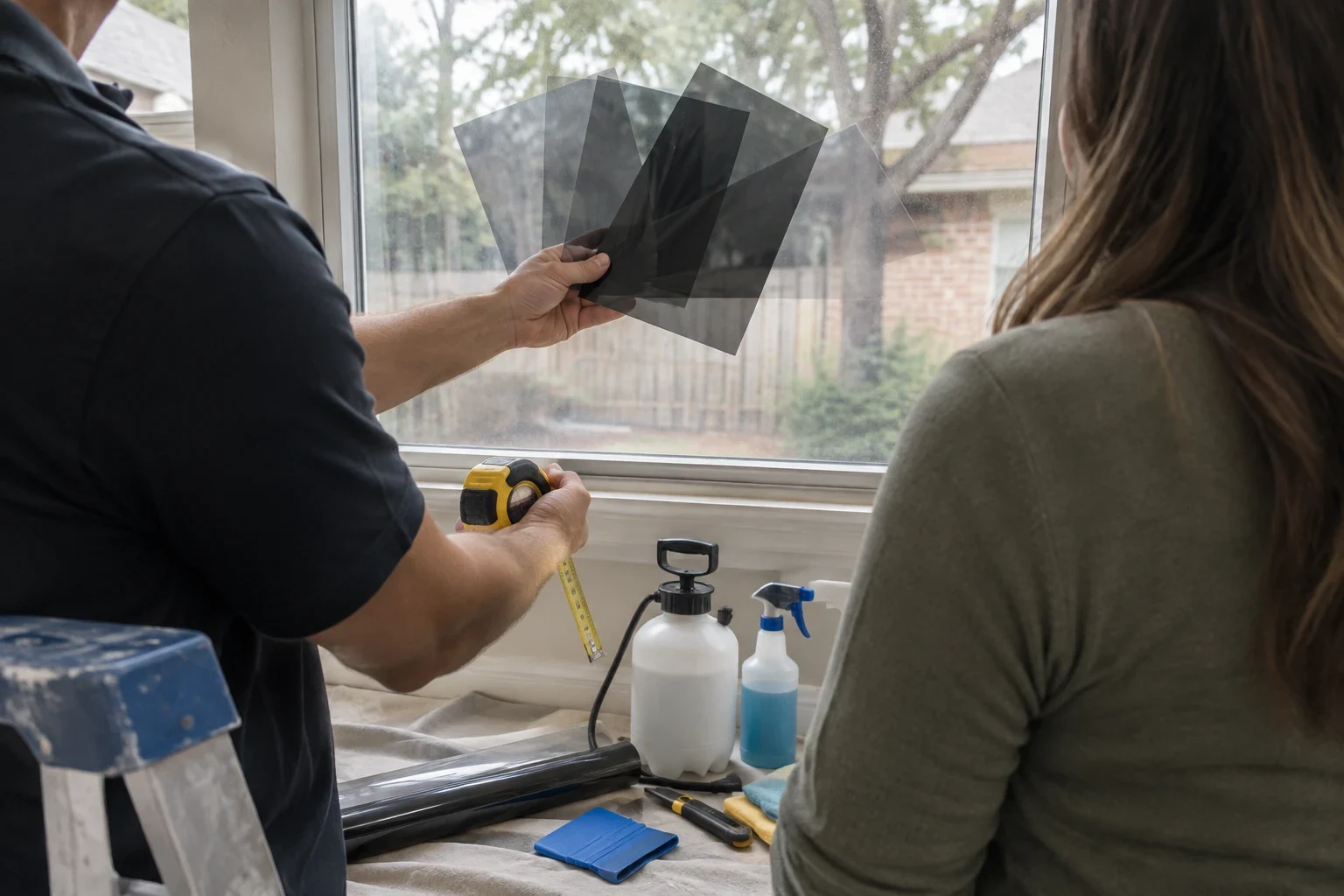
- Reflective films come in a range of visible light transmission, from fairly light silver to deep mirror. We show you samples on your own glass so you can judge the look from inside and from the yard.
- Glass prep and installation
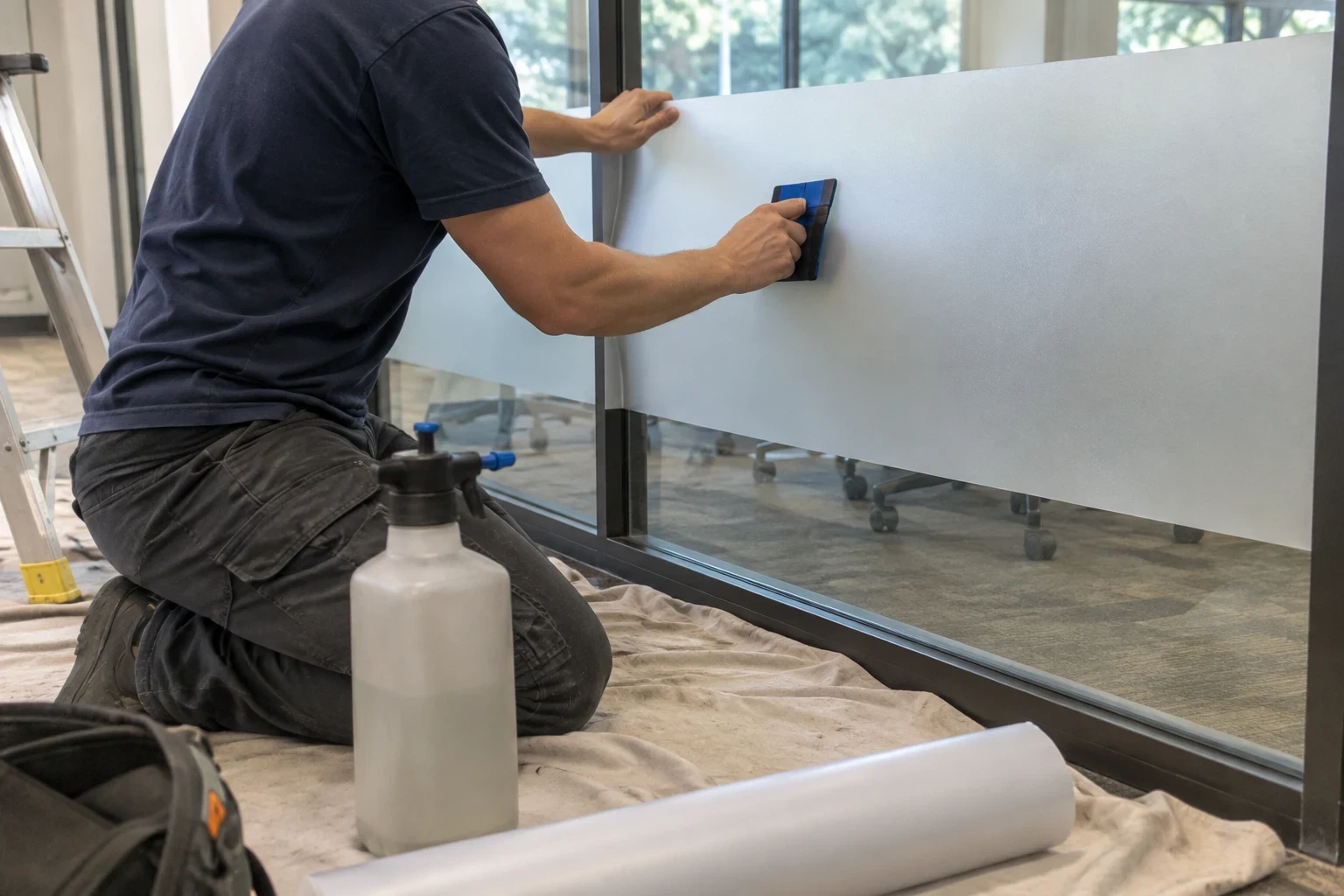
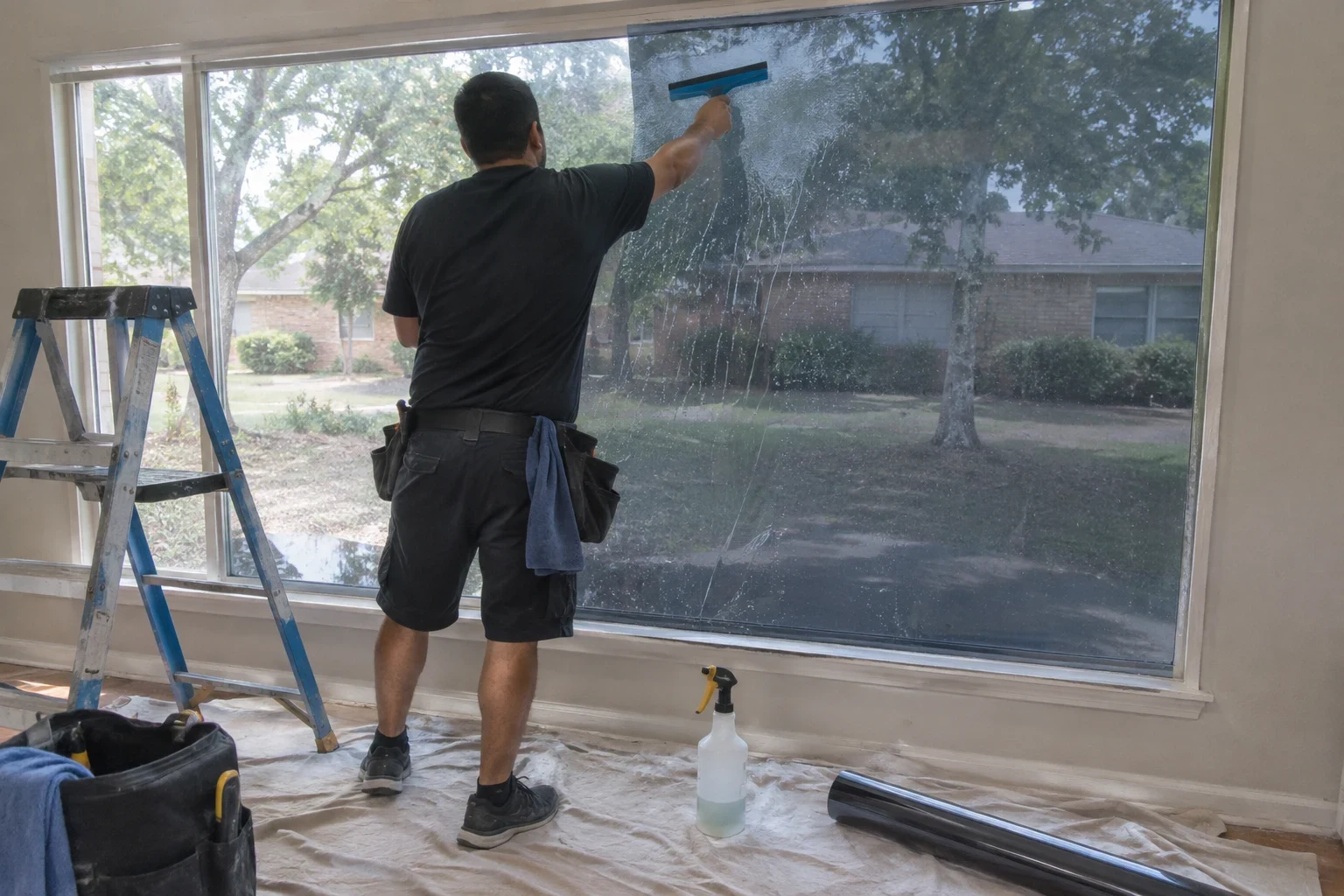
- Each pane is scraped and cleaned to remove paint specks and mineral film. The film is cut to leave a small gap at the gasket, wet-applied with a slip solution and squeegeed to push out water and air.
- Room protection and cleanup
- We lay drop cloths under every window, move what needs moving with your OK and wipe down sills and frames when we finish.
Signs reflective film could help
One room is always hotter
If a single room runs several degrees warmer every afternoon, direct sun through the glass is a likely cause. Reflective film targets exactly that.
Glare off screens and floors
Bright sun washing out a TV or computer screen, or bouncing off tile and hardwood, is something a mirror-grade film cuts sharply.
Furniture and rugs fading
Sun-facing fabrics losing color point to UV and visible light exposure. Reflective films block nearly all UV and reduce the visible light that also drives fading.
Blinds closed all day
If you keep shades down from noon on just to stay comfortable, film can let you open them and still keep the heat out.
Neighbors can see in by day
Reflective film gives one-way daytime privacy on street-facing glass. It does not work at night, so we will tell you if privacy window tinting fits better.
How a reflective film job runs
- 1
Phone consultation
You tell us which rooms are uncomfortable and when. We ask about window size, orientation and any HOA or deed rules on exterior appearance, since reflective finishes are visible from the street.
- 2
On-site assessment
We look at the glass, check for seal failure or existing film and hold samples up to the windows. You get a written quote that lists each window, the film and the price.
- 3
Install day
Most homes take a single day. We work one room at a time so the rest of the house stays usable, and the film goes on the interior side of the glass.
- 4
Curing and follow-up
Small water pockets or a light haze are normal for a few days to a few weeks while the adhesive cures, longer in cool or humid weather. Leave the film alone and avoid cleaning it for about 30 days, then use a soft cloth and a non-ammonia cleaner.
What moves the price
Reflective film is priced by the square foot of glass, then adjusted for the conditions of the job. We quote each window separately so you can see where the money goes and drop windows that do not need film.
- Total glass area
- More square footage means more film and more labor. Several large panes often cost less per foot than many small divided-lite windows.
- Film grade
- Darker, multi-layer and dual-reflective films cost more than a basic silver film. Dual-reflective types use a lower-reflectance inner face to reduce the nighttime mirror effect.
- Access and height
- Second-story, transom and stairwell windows need ladders or staging and take longer to install safely.
- Removing old film
- Bubbled or purple-faded film has to be steamed and scraped off before new film goes on, which adds time.
- Glass type limits
- If the glass check rules out a deep reflective grade on certain panes, a different film may be specified for those windows, which can change the total.
Reflective film questions
Something not covered here? (713) 903-7407
Will my windows look like mirrors from the street?
During the day, yes, to a degree that depends on the grade you choose. Lighter silver films give a soft sheen, while deep mirror films look fully reflective. We bring samples so you can see both from outside before deciding.
Can reflective film crack dual-pane windows?
It can if the wrong film goes on the wrong glass. Film raises the temperature of the inner pane, and large or annealed insulated units are more sensitive to that stress. Checking the glass type first is how we avoid it, and we will steer you to a safer film where needed.
Does it make rooms darker?
Yes, more than ceramic or non-reflective films at the same heat rejection. That is the reason some people choose it only for the hottest west and south windows and use a lighter film elsewhere.
Will it interfere with cell signal or Wi-Fi?
Metallized films can weaken cell reception slightly, especially if every window in a room is covered. If you already have weak signal indoors, we may suggest ceramic window film, which has no metal layer.
Do I need HOA approval?
Some associations and deed restrictions limit how reflective exterior glass can look. Check your rules before the install. If your board wants details, mention it when you call and we will bring a film sample and spec sheet to the assessment for you to hand over.
Find out if reflective film is right for your windows
Tell us which rooms overheat and when. We will look at the glass and the sun angle and give you a straight answer on reflective film or a better option.