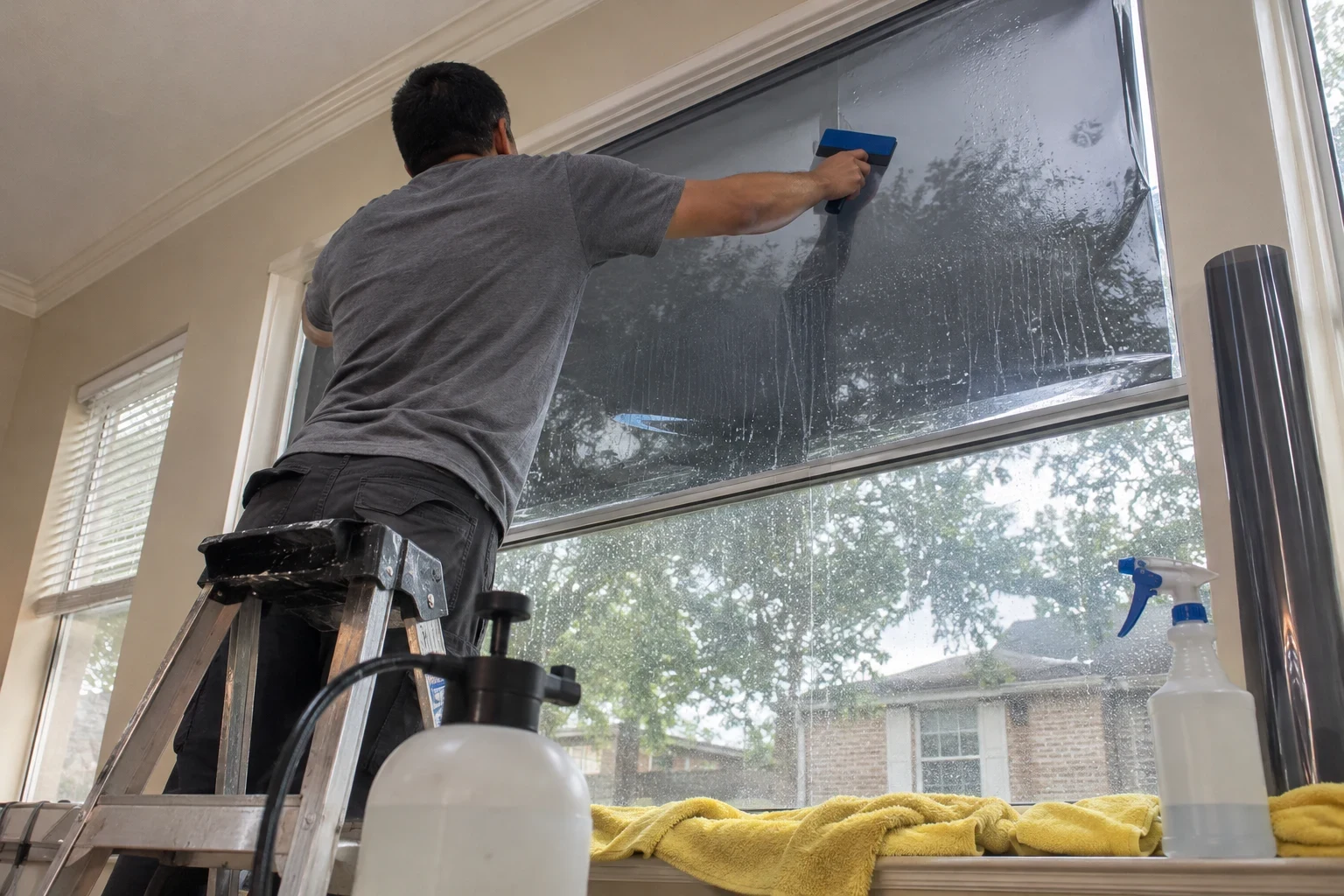
Window Tinting in West University Place That Starts With the Real Problem
We tint homes, offices and storefronts with ceramic, reflective, privacy, security and decorative window film. Before we recommend anything, we check your glass type, which way each window faces and what is actually heating or glaring the room. Homeowners and businesses in Bellaire and Houston get the same careful look.
- Glass checked before film
- Written film recommendation
- Clean, careful installs
- Free consultations
Why Our Recommendations Hold Up
A film that fixes the wrong problem is money spent twice. So we diagnose first and sell second.
- 01
We separate heat from glare
Heat in a room is mostly infrared energy; glare is visible light. A dark film can cut glare and still let infrared through, while a clear ceramic film can block much of the heat with little change in brightness. We figure out which one is bothering you before we pick a product.
- 02
We check the glass before applying film
Dual-pane, low-e coated, tempered and laminated glass each absorb heat differently. Putting a high-absorption film on the wrong unit can raise thermal stress on the pane or strain its seal. We identify the glass and match film to it using manufacturer compatibility guidance.
- 03
Every window, not just the obvious one
West and south exposures usually do most of the damage, but skylights, transoms and sidelights add up. We walk the space and tell you which windows need film and which can be left alone.
- 04
An honest no when film is the wrong fix
If the real problem is a failed window seal, fogging between panes or missing insulation, we say so. Film will not repair a broken insulated glass unit.
- 05
Tidy work inside your space
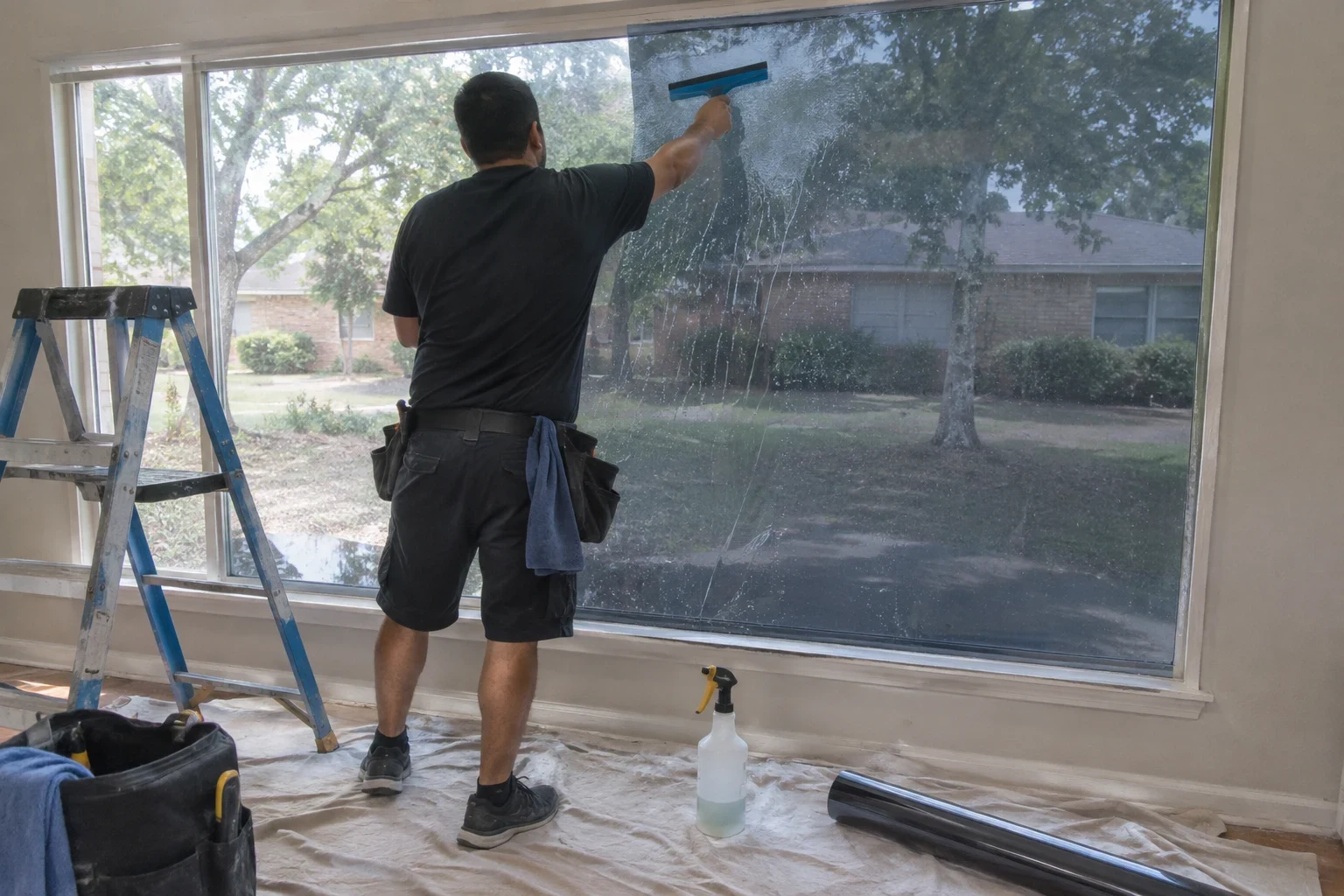
We lay drop cloths, move furniture back from the glass with your permission and clean the frames and sills when we finish.
Window Film for Homes and Businesses
Most rooms that feel too hot, too bright or too exposed share one cause: the wrong kind of light coming through the wrong pane of glass. We offer home window tinting, commercial window tinting and office window tinting, plus specialty films for privacy, security, decoration and turf protection. Ceramic window film handles heat with little change in view, reflective window film rejects the most sun, and non-reflective window film keeps the glass looking like glass. Each service page explains what that film does and where it fits.
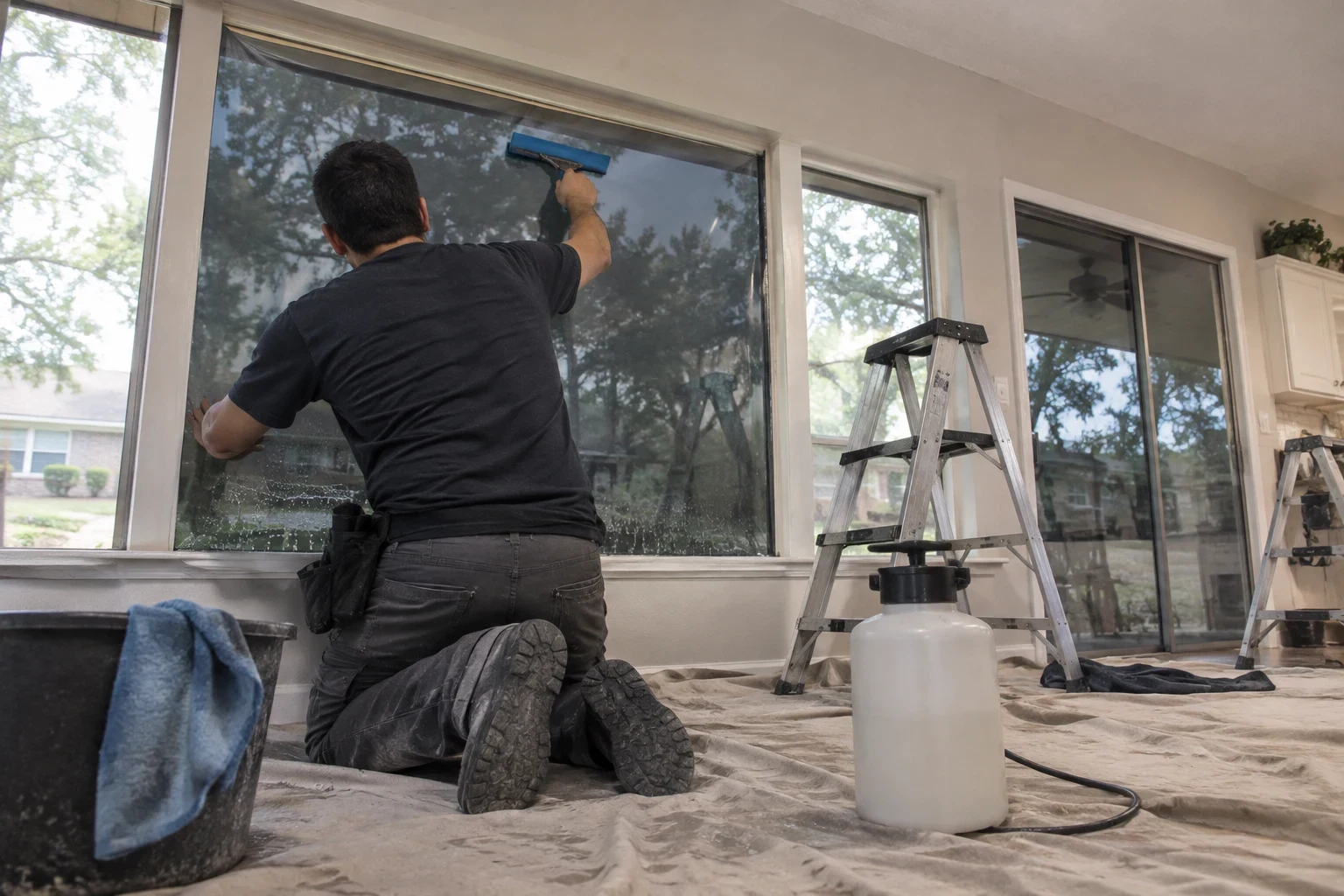
Home Window Tinting
Window film for hot, glary or faded rooms, picked after we check your glass type, coatings and which way each window faces.
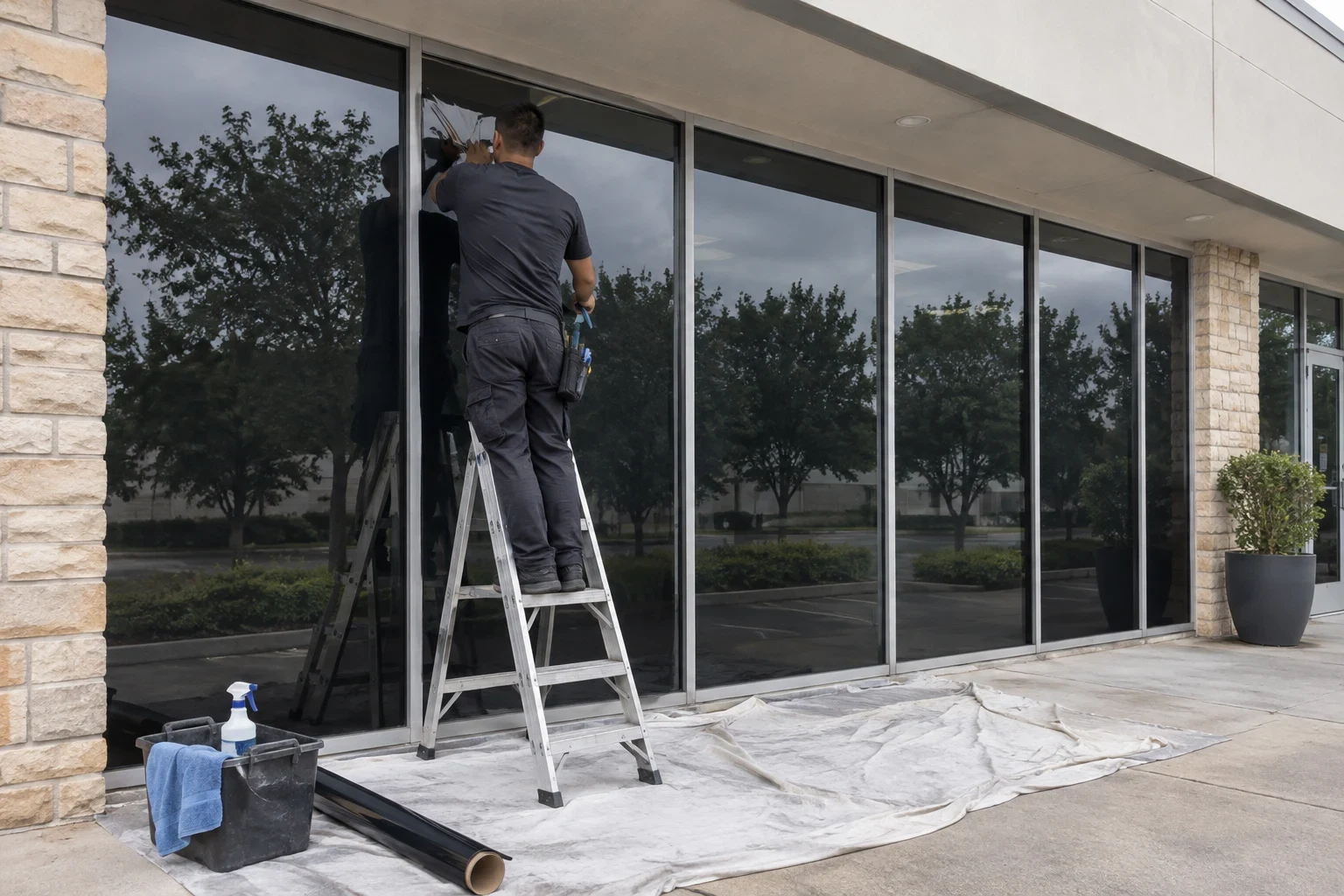
Commercial Window Tinting
Window film for storefronts, lobbies and small commercial buildings, chosen after we check each glass type and where the heat or glare actually comes from.
Office Window Tinting
Window film for offices that cuts monitor glare, evens out hot perimeter rooms and adds privacy, chosen pane by pane after we find what is causing the problem.
Privacy Window Tinting
Frosted, gradient and reflective window film chosen by the actual sightline, so the right rooms stay private at the right time of day.
Security Window Film
Thick, clear film that holds broken glass in place and slows forced entry, specified window by window after we check the glass and frame.
Decorative Window Tinting
Frosted, gradient and patterned window film that blocks sightlines but keeps daylight, matched to your glass and how much view you want to give up.
Ceramic Window Film
Nano-ceramic window film that cuts infrared heat and UV while staying clear, non-reflective and friendly to cell and Wi-Fi signals.
Reflective Window Film
Metallized film that bounces solar heat off west- and south-facing glass, matched to your glass type before we recommend it.
Non-Reflective Window Film
Low-reflectance film that controls heat and glare while your windows keep their natural look inside and out, day and night.
Turf Protection Window Film
Film that breaks up the concentrated sunlight bouncing off energy-efficient windows, so it stops scorching artificial grass, siding and plants.
What Moves the Price of Window Film
There is no single price per window, because no two jobs use the same film on the same glass. The quote comes from a few measurable things. We walk you through each one during the consultation so the number makes sense.
After the consultation you get a written estimate that lists the film, the windows and the square footage. You can compare it line by line before deciding.
- Total glass area
- Film is priced by the square foot of glass, so the count and size of panes matter more than the number of rooms.
- Film type
- Ceramic film uses nano-ceramic particles to reject infrared heat and generally costs more than dyed or standard reflective film. Security film is thicker, measured in mils, and takes more time to install.
- Glass type and condition
- Low-e or older dual-pane units may need a specific film to stay within safe absorption limits. Scratches, paint overspray or old film that must be stripped add prep time.
- Access and height
- Tall great-room windows, stairwell glass and skylights need ladders or scaffolding and take longer than standard double-hung windows.
- Divided lites and odd shapes
- Windows with grids, arches or many small panes require more cuts and careful edge work than one large sheet of glass.
How a Tinting Job Runs
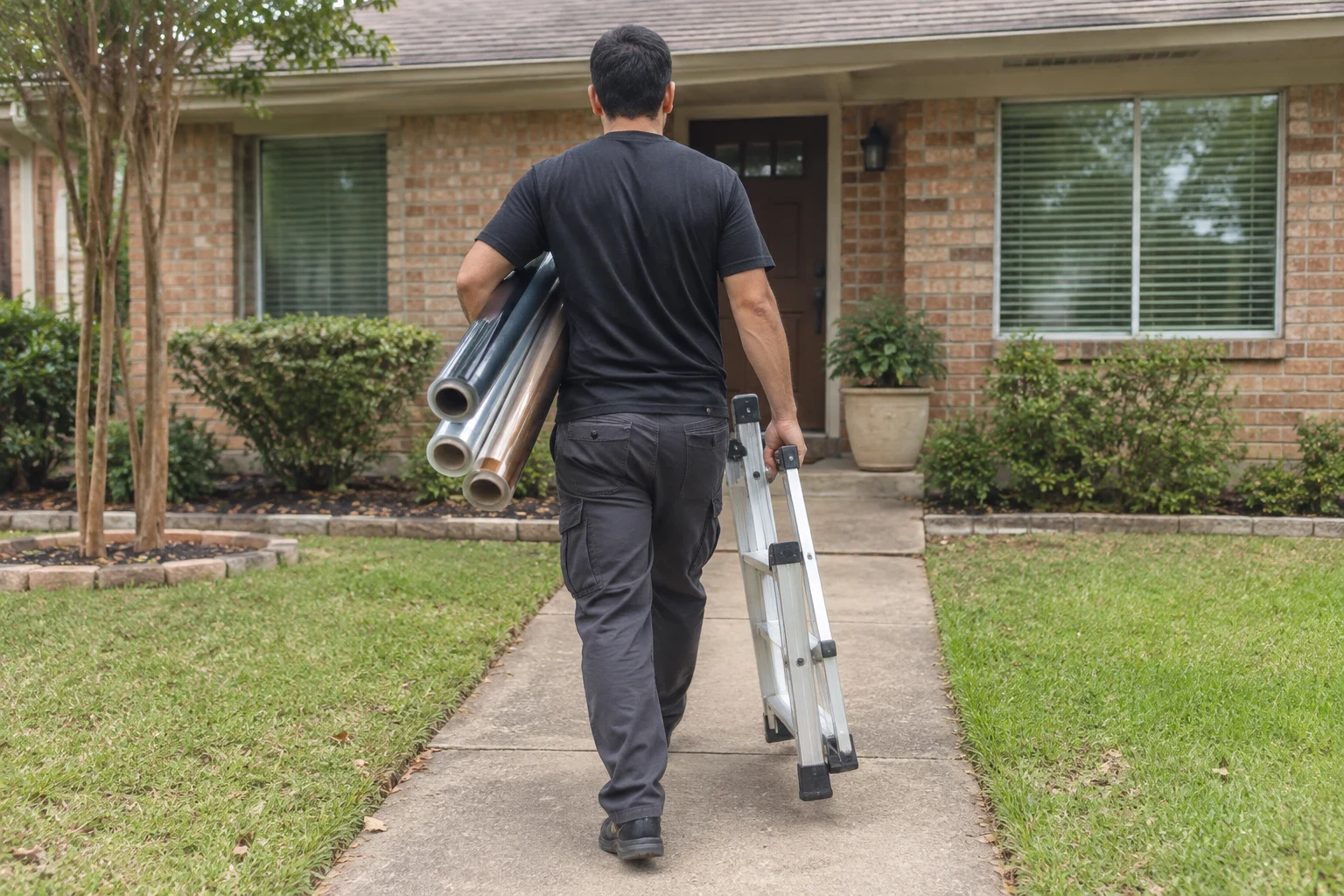
Most residential installs take a day or less. Larger commercial spaces are scheduled around your business hours.
- 1
Phone call
Tell us what bothers you about the room: afternoon heat, glare on screens, faded floors or neighbors who can see in. We set a time to visit.
- 2
On-site diagnosis
We measure each pane, identify the glass type and note the direction each window faces. We can hold film samples to your actual glass so you see the shade and reflectivity in your own light.
- 3
Written recommendation
You get the film we suggest for each window, the reason for it and the cost. Nothing is ordered until you approve.
- 4
Installation
We clean the glass, cut the film to fit with a small gap at the frame edge and squeegee out the mounting solution. Furniture and floors stay covered while we work.
- 5
Curing
Film can look slightly hazy or show small water pockets for a few days to a few weeks while the remaining moisture evaporates. We tell you how long to wait before cleaning the inside of the glass.
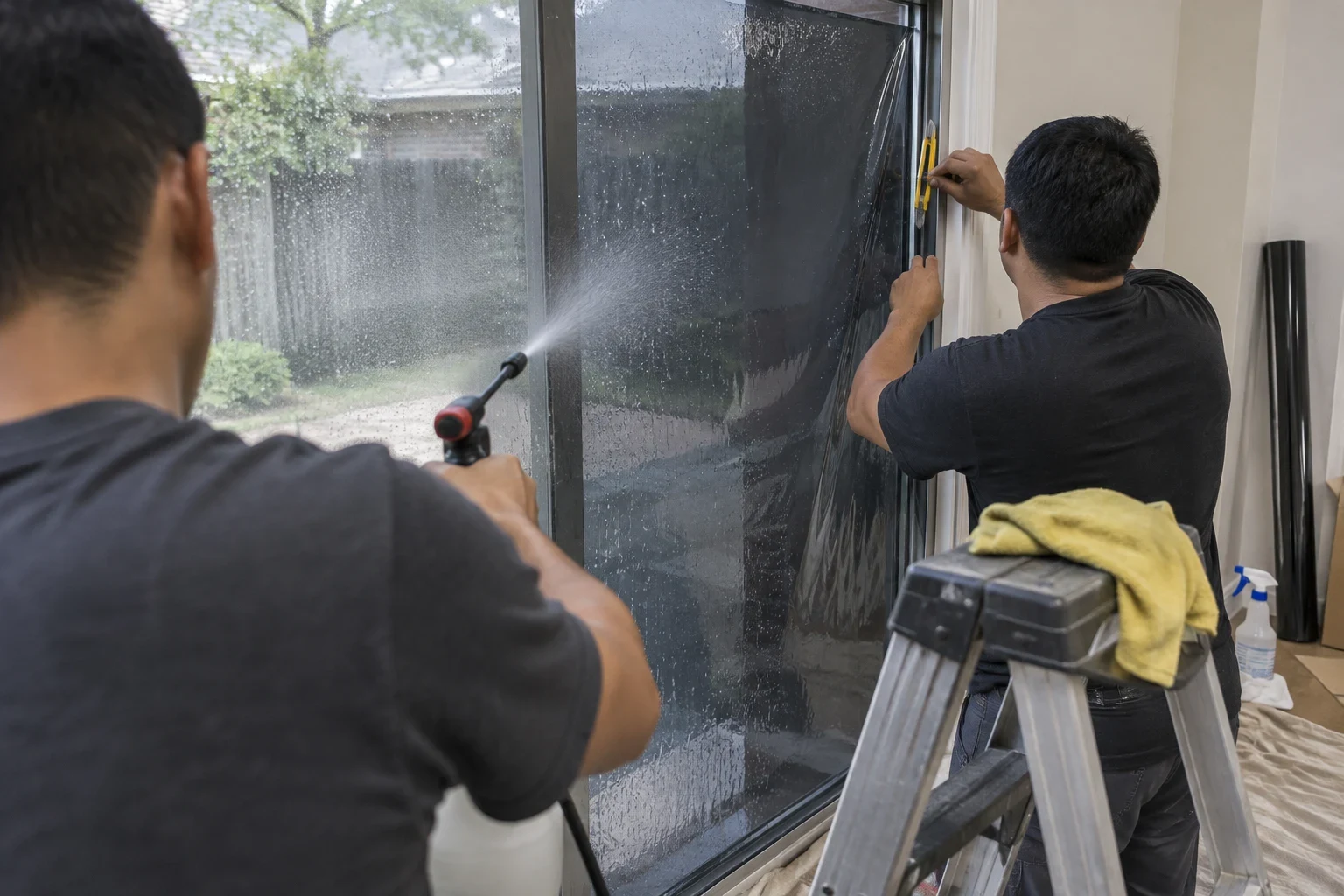
About Our Company
We are a window tinting company working in West University Place and the surrounding area. Our customers are homeowners who want cooler, more private rooms and businesses that want less glare, more privacy and lower cooling costs.
Our approach is simple. We look at where the heat and light actually come from before choosing a film. A bedroom that overheats in the afternoon needs a different answer than an office where monitors wash out in the morning, and a storefront facing the street needs something else again. Getting that right at the start means the film you live with for years is the one that fits the problem.
- Insurance
- Insured installers
- Certifications
- 24,918+ home windows tinted
Window Tinting Questions We Hear Most
Will window film crack my dual-pane windows?
It can if the wrong film goes on the wrong glass. Darker, high-absorption films make the outer surface of a pane hotter, which raises thermal stress on the glass and the seal. We identify your glass type and use films the film manufacturer lists as compatible with it. If your window manufacturer has specific film requirements, we check those before installing.
Will my rooms get dark?
Not necessarily. Ceramic film can reject much of the infrared heat while letting most visible light through, so a room can feel cooler without looking tinted. If glare is the problem, we may suggest a film with lower visible light transmission. We show you samples on your own glass before you choose.
Can people see in at night with privacy film?
Reflective and one-way films work by brightness. During the day the outside is brighter, so the glass looks mirrored from the street. At night, with lights on inside, that reverses and people can see in. For full privacy day and night, frosted or decorative film is the better choice, and we explain the tradeoff at the consultation.
Does window film stop fading on floors and furniture?
Most quality window films block nearly all ultraviolet light, which is a major cause of fading. Visible light and heat also contribute, so fading slows a lot but does not stop completely. A film with higher heat rejection offers more protection than UV blocking alone.
Will window film lower my cooling bills?
It can, mainly on glass that takes direct afternoon sun. Film reduces the solar heat entering through the pane, so the air conditioner runs less to hold the same temperature. How much you save depends on the film, the window orientation and how much glass the room has, so we point out which windows will make the biggest difference.
How long does installation take, and do I need to leave?
A typical home takes a few hours to a day depending on the number and size of windows. You do not need to leave. We just need clear access to the glass and a little space to work.
Do you work on offices and storefronts too?
Yes. Our commercial window tinting and office window tinting services cover glare control on screens, privacy for conference rooms, heat rejection on sun-facing glass and security film for ground-floor windows. We schedule around your business hours.
Where We Install Window Film
We are based in West University Place and work throughout the nearby area, including Bellaire, Houston, Hunters Creek Village, Piney Point Village, Spring Valley Village and Bunker Hill Village. We also serve Pearland, Missouri City, Fresno and Stafford.
- West University Place
- Bellaire
- Houston
- Hunters Creek Village
- Piney Point Village
- Spring Valley Village
- Bunker Hill Village
- Pearland
- Missouri City
- Fresno
- Stafford
If your address is close by but not listed, call and ask. We will tell you plainly whether we can reach you.
Find Out What Your Windows Really Need
We will check your glass, measure the sun exposure and recommend a film that fits the actual problem. The consultation is free and you decide afterward.