ServicesPrivacy Window Tinting
Privacy Window Tinting in West University Place
Privacy window tinting keeps people from seeing into bathrooms, bedrooms and front rooms without closing the blinds all day. We first work out where the sightline comes from and when it matters, then fit the window film that actually blocks it.
Privacy film only works when it matches the problem
Most privacy complaints come down to one window, one angle and one time of day. A neighbor's upstairs window that looks down into a shower. A street-facing living room that turns into a lit display case after sunset. Those are different problems, and they need different films.
Reflective privacy film works on a light imbalance. During the day the outside is brighter, so passersby see a mirrored surface while you see out clearly. After dark, with lamps on inside, that balance flips and the film becomes close to see-through from the street. Frosted and gradient films work differently: they diffuse the image at all hours while still passing daylight, but you give up the clear view out through the frosted area.
That is why we ask about your evenings before we talk about film. Picking the film from a catalog photo is how people end up paying twice. Finding the actual sightline first means the room is private when you need it to be.
What privacy window tinting includes
Sightline check
We stand where an outsider would, at the street, the side yard and any neighboring windows, and note which panes give a view in. Often only the lower half of a window needs coverage.
Film matched to the time of day
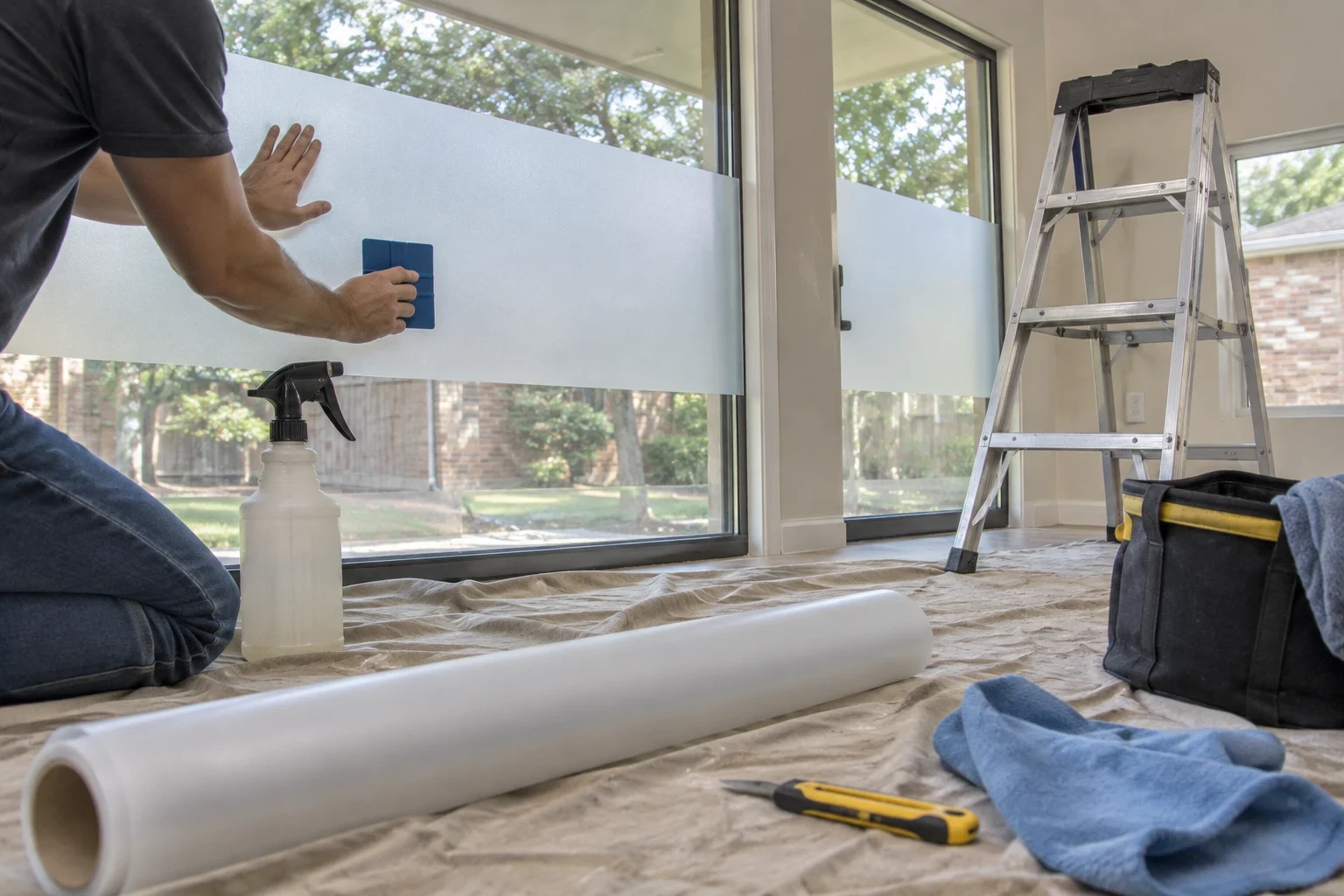
Reflective or dual-reflective film for daytime privacy with a clear view out, frosted film for round-the-clock privacy, or a gradient or banded frost that covers the lower glass and leaves the top clear.
Glass compatibility review
We look at whether the glass is single or dual pane, tempered or annealed, and whether it already has a low-e coating. Dark or highly absorptive films on some insulated units can raise thermal stress at the edges, so we choose a film that suits the glass.
Clean installation
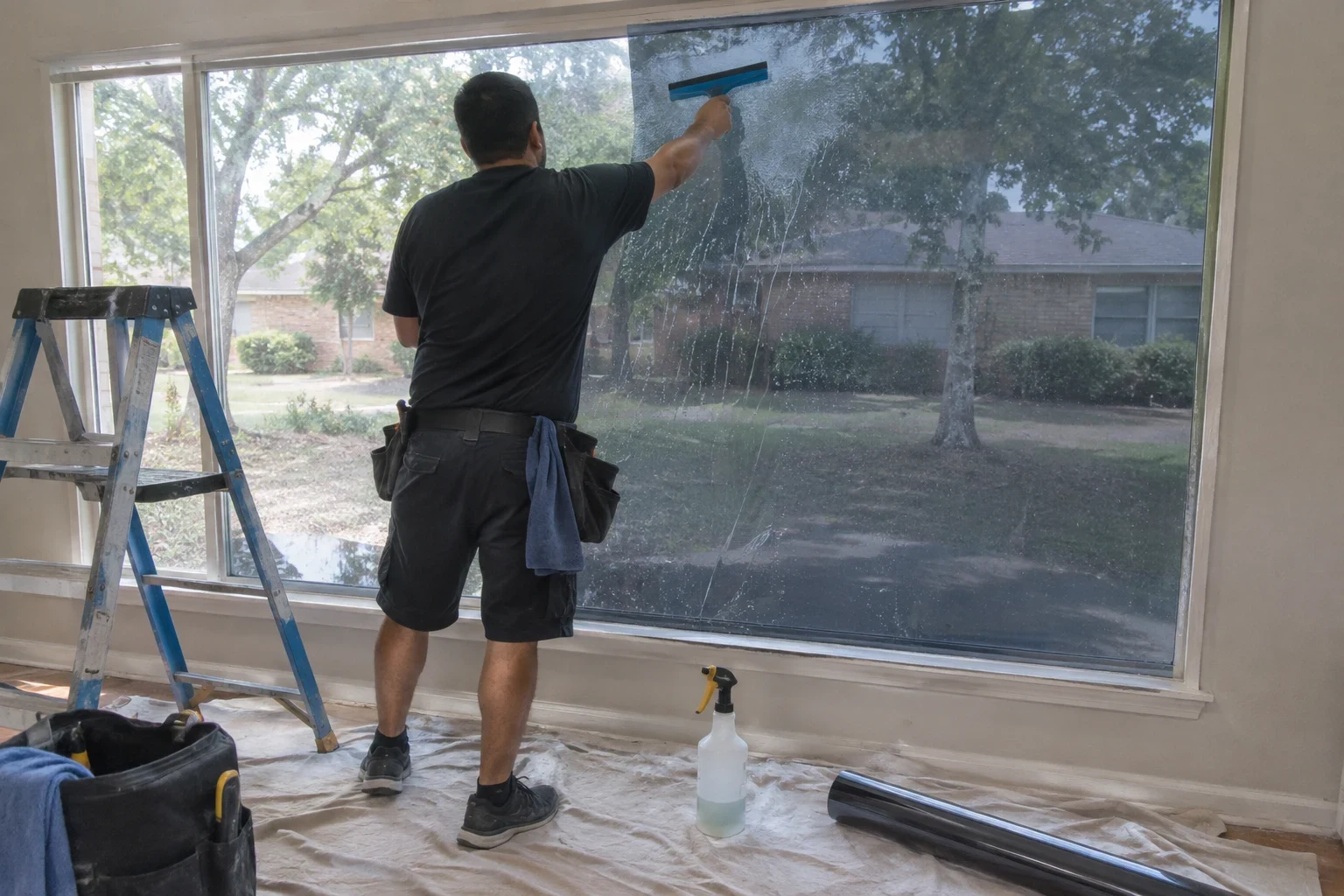
Glass is scraped and cleaned of paint specks and residue, film is cut to leave a small, even gap at the gasket, and water and air are squeegeed out so the edges sit flat.
Protection and cleanup
Sills, floors and furniture near the window are covered during work, and we leave the room the way we found it, with care instructions for the first weeks.
Signs privacy film is the right fix
Blinds that never open
If a bathroom or bedroom blind stays shut from morning to night, you are trading away daylight for privacy. Frosted film gives both back.
A neighbor's second story looks in
On close lots, upstairs windows next door often look straight into a primary bath or dressing area. A partial frost at the right height usually solves it.
The front room feels exposed at night
Reflective film will not help after dark. If evenings are the problem, we will tell you so and point you toward frosted or gradient film instead.
Glass doors and sidelights
Clear sidelights by the front door and glass shower or patio doors show more than people expect. Decorative or frosted film covers them without replacing the glass.
Daytime glare plus privacy
West-facing rooms that also face the street can use a reflective film that cuts glare and heat while hiding the interior during daylight hours.
How a privacy film job runs
- 1
Phone consultation
You tell us which rooms bother you and when. We ask about window size, glass type if you know it, and whether you want to keep a view out.
- 2
On-site walk and samples
We check the sightlines from outside, measure each pane and hold film samples against your glass so you can see the actual level of frosting or reflectivity in your light.
- 3
Written quote
You get a quote by window, with the film named for each one, so you can tint the bathroom now and the front room later if you prefer.
- 4
Installation day
Most rooms take a few hours. We prep, cut and apply the film, then check edges and corners before we leave.
- 5
Curing
Small water haze or tiny bubbles can show for a few days to a few weeks as moisture works out. Hold off on cleaning the film until it clears, then use a soft cloth and a non-ammonia cleaner.
What moves the price of privacy film
Privacy tinting is priced by the window, not by the house. The film you choose and the condition of the glass matter more than square footage alone. We explain each line on the quote before any work is scheduled.
- Film type
- Standard frosted film, gradient or patterned frost, and dual-reflective film are made differently and carry different material costs.
- Size and number of panes
- Large single sheets need wider film rolls and more careful handling. Many small divided-light panes take more labor per square foot.
- Access
- Stairwell windows, transoms and glass above a tub or vanity need ladders or extra setup time.
- Old film removal
- Peeling or purple-tinged film has to be steamed and scraped off, and the adhesive cleaned, before new film can go on.
- Partial coverage
- Frosting only the lower part of a window uses less film but needs precise, level cutting across each pane.
Privacy window tinting questions
Something not covered here? (713) 903-7407
Can people see in at night with privacy film?
With reflective film, yes, once your lights are on and it is dark outside. Frosted and gradient films block the view at night as well as during the day. If nighttime privacy matters most, frosted film or a combination with shades is the honest answer.
Will frosted film make the room dark?
No. Frosted film diffuses light rather than blocking it, so most daylight still comes through. The room feels softer and more even, without hard sun spots.
Can I still see out?
Through reflective film, yes, clearly during the day. Through frosted film you see light and shapes but not detail. A gradient or banded frost keeps the upper glass clear so you keep a view of the sky and trees.
Is privacy film safe on double-pane windows?
Most frosted and light reflective films are fine on insulated glass. The risk comes from very dark or heat-absorbing films on certain units, which is why we check the glass before recommending anything.
Can the film be removed later?
Yes. Window film can be steamed and peeled off and the adhesive cleaned from the glass. That makes it a good choice for renters' requests or rooms you may remodel.
How does privacy film compare to decorative film?
Privacy film is chosen for how well it hides the view. Decorative window tinting adds patterns, etched-glass looks or designs. Many decorative films also provide privacy, so we can show both during the consultation.
Get the right rooms private
Tell us which windows feel exposed and at what time of day. We will explain which film blocks that view and which one will not, before you spend anything.