ServicesCommercial Window Tinting
Commercial Window Tinting in West University Place
Hot sales floors, washed-out screens and faded displays usually trace back to specific panes, not every window. We identify your glass, measure what is coming through it and specify window film that fixes the real problem without stressing the glass.
What commercial window tinting solves, and when it is the right fix
Commercial buildings rarely use one kind of glass. A storefront may have single-pane tempered glass at the entry, insulated units along the side and a factory low-e coating on newer replacements. Each one handles solar heat differently, and each one accepts window film differently. Putting the same dark film on all of them is how glass cracks at the edge and how money gets spent on panes that were never the problem.
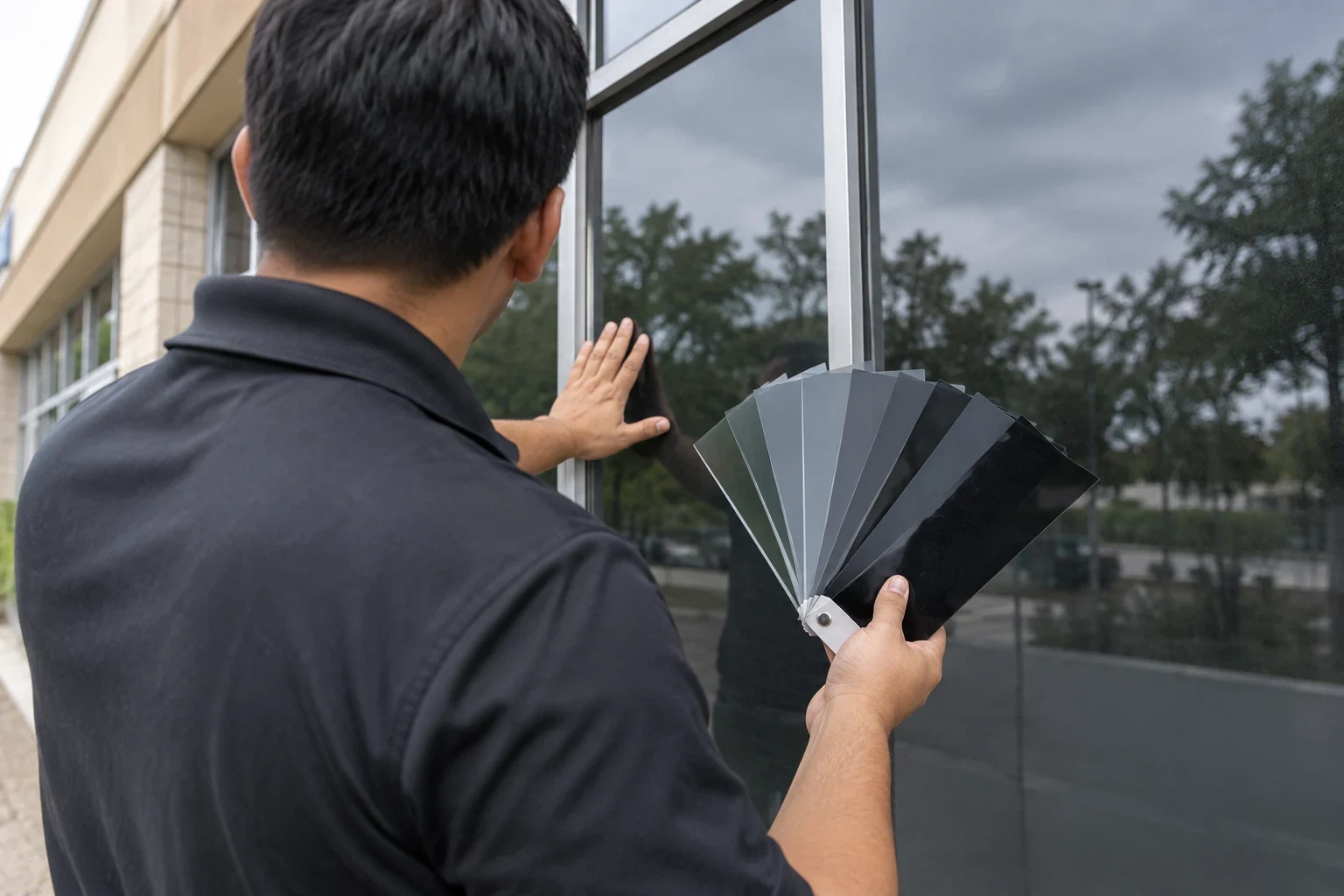
So we start by working out the cause. A hot front counter can come from unshaded west-facing glass, or from a supply duct that is not delivering air. Film fixes the first and does nothing for the second, and we will tell you which one you have. Once the cause is clear, we match a film to each elevation: ceramic film for heat rejection with a clear look, reflective film where daytime privacy and maximum solar control matter, or non-reflective film where the storefront needs to look the same from the street.
For interior suites and workstations, our Office Window Tinting page covers screen glare in more detail.
What the work includes
- Glass identification
- We check each pane for tempering marks, count the panes in insulated units and test for low-e coatings. That tells us which films the glass can safely carry.
- Thermal stress check
- Absorptive films raise glass temperature. We compare your glass type, size and frame against the film maker's glass-to-film guidance before recommending anything, which keeps large insulated panes from cracking.
- Film specified by elevation
- South and west faces often need stronger heat rejection than north-facing glass. We specify film per side of the building, so you are not paying for performance where the sun never reaches.
- Old film removal
- Bubbled, purple or peeling film comes off with steam and blades, and the adhesive is cleaned to bare glass so the new film bonds properly.
- Clean edges and trim
- Film is trimmed with a small gap at the gasket so it can shed water during installation and will not lift at the edge later.
Signs your building needs window film
Staff relocate desks or close blinds
When people avoid the sunny side by midafternoon, that floor space is effectively lost. Film lets you open the blinds again.
The HVAC runs hardest on one side
If thermostats near large glass never catch up on bright days, solar heat gain through those panes is a likely driver. We confirm it before quoting.
Merchandise fades in the display window
UV and visible light bleach fabrics, packaging and printed signs. Film with high UV protection slows that noticeably, though no film stops fading completely.
Glare on screens and point-of-sale terminals
Reflections that force staff to tilt monitors point to low-angle sun on specific panes, which a lighter film can often correct.
Passersby see straight into back rooms
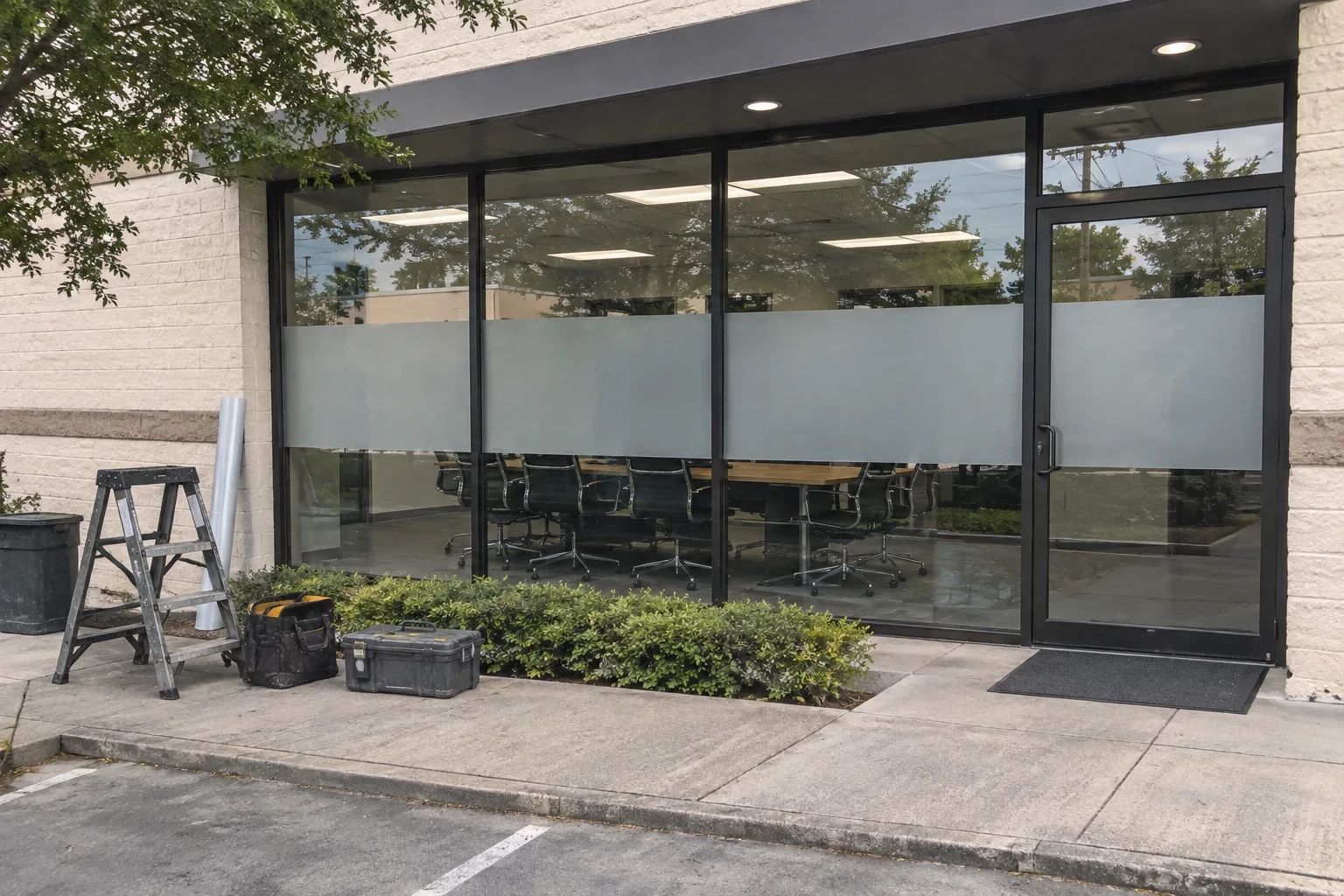
Ground-floor offices and storage areas facing the sidewalk often need daytime privacy. Our Privacy Window Tinting page lists the film options.
How a commercial job runs
- 1
Phone consultation
You tell us what is going wrong and where. We ask about window age, orientation and any building rules on exterior appearance.
- 2
On-site assessment
We look at every pane involved, take light and heat readings where they help, and note access like high transoms or glass behind fixtures.
- 3
Written proposal
You get a line-by-line proposal listing each window, the film chosen for it and why. If a pane should not be filmed, we say so.
- 4
Installation
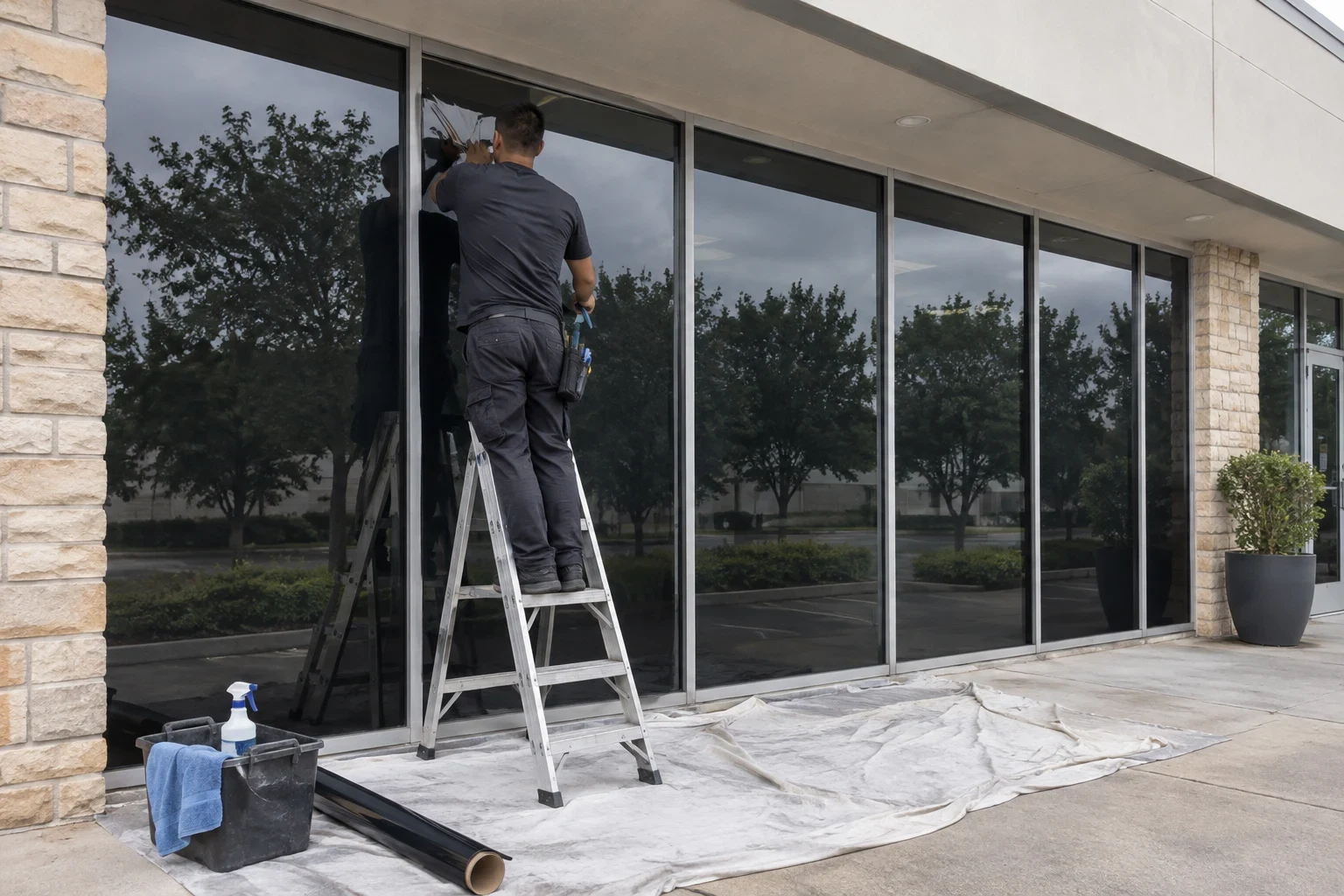
We protect floors and displays, deep clean the glass, apply the film wet and squeegee out the solution. Work can be scheduled before opening or by zone so your business keeps running.
- 5
Curing and walkthrough
Light haze or small water pockets can show for a few weeks while moisture evaporates, longer in humid weather. We walk the glass with you and explain when cleaning can resume.
What moves the price of commercial window tinting
We price from the windows themselves, not a flat rate per building. The consultation is free, and the written proposal shows what each part of the job covers so you can drop or add areas before anything is installed.
- Total glass area and pane count
- Square footage drives film cost, while many small panes take more cutting and trimming time than a few large ones.
- Film type
- Ceramic and spectrally selective films cost more than standard dyed or reflective films because of the materials used to block heat while staying clear.
- Access
- Transoms above doors, double-height lobbies and glass behind fixed shelving need ladders, lifts or extra setup.
- Existing film
- Removing failed film and its adhesive adds labor, especially when it has baked onto the glass for years.
- Scheduling
- Early-morning or after-hours installs to avoid customers can affect the total, and we note that in the proposal.
Commercial window tinting questions
Something not covered here? (713) 903-7407
Can window film crack our insulated glass?
It can if the wrong film goes on the wrong glass. Dark, highly absorptive films heat the inner pane, and large insulated units with clipped edges are most at risk. That is why we identify each glass type first and check the film maker's compatibility guidance before recommending a product.
Do we have to close while you install?
Usually not. We can work in sections, start before opening hours or tint the front windows on a slower day. Most of the disruption is a small work area and some drop cloths.
Will reflective film let people see in at night?
Yes. Reflective film works by brightness difference, so once interior lights are brighter than outside, the view reverses. If nighttime privacy matters, we will talk through blinds, frosted decorative film or a combination.
Our landlord controls the building exterior. Is that a problem?
Many leases restrict how glass looks from the street. We can give you the film specification and a sample so building management can approve it before we schedule the work. Non-reflective film is often the easiest to get approved.
How soon can we clean the windows after installation?
Wait about 30 days before cleaning the filmed side, since the adhesive is still curing. After that, use a soft cloth and a mild, ammonia-free cleaner, never razor blades or abrasive pads.
Find out which panes are costing you
Tell us where it gets hot, bright or too exposed, and we will set up a free consultation to look at the glass itself. You get a straight answer on whether film is the fix and which one fits.