ServicesDecorative Window Tinting
Decorative Window Tinting in West University Place
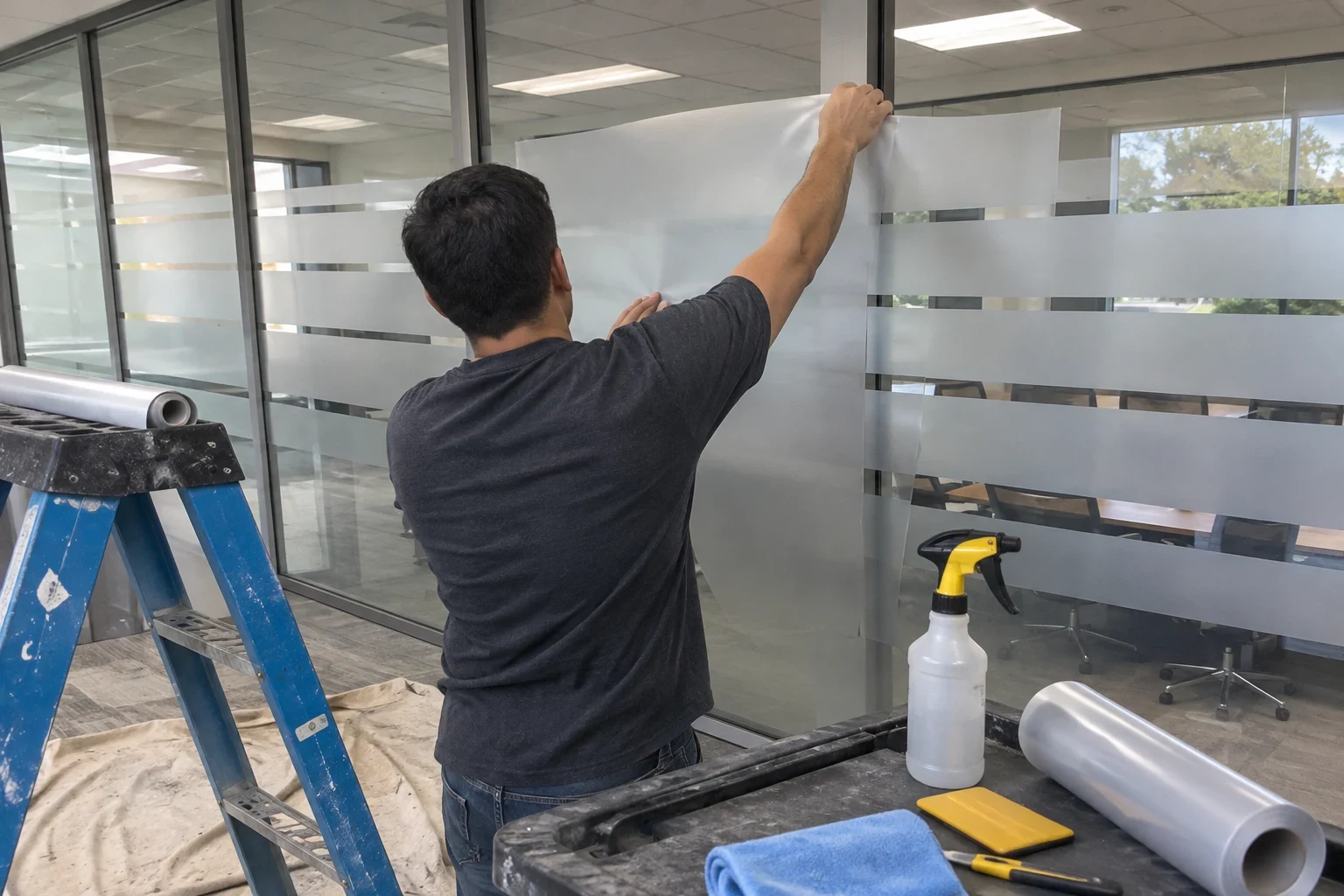
We apply frosted, gradient and patterned window film to bathroom windows, entry sidelights and interior glass. You keep the daylight and lose the direct view in. Before we suggest a film, we check what the glass is and where privacy actually breaks down.
What decorative film does, and when it is the right choice
Decorative film is a translucent layer, usually polyester or vinyl, applied to the inside face of the glass with a pressure-sensitive adhesive. It scatters light instead of blocking it, so a room stays bright while shapes on the other side blur into soft color. That is different from privacy film with a mirrored finish, which depends on the outside being brighter than the inside and stops working once your lamps come on. A frost works the same at noon and at 10 p.m.
It is the right call when you want a view gone for good on part of the glass: a bathroom window facing a neighbor's driveway, the sidelights beside a front door, a glass office door at home. Sometimes the real problem is only the bottom half of a window, or only one pane in a pair. We look at the sightlines first. That way you film the glass that needs it and leave clear what you still want to see through.
What the work includes
Glass check before anything is quoted
We confirm whether the pane is single or insulated, tempered or annealed, smooth or textured. We also check for a coating on the inside face. Each one changes which film will bond properly and which will not.
Film selection with samples
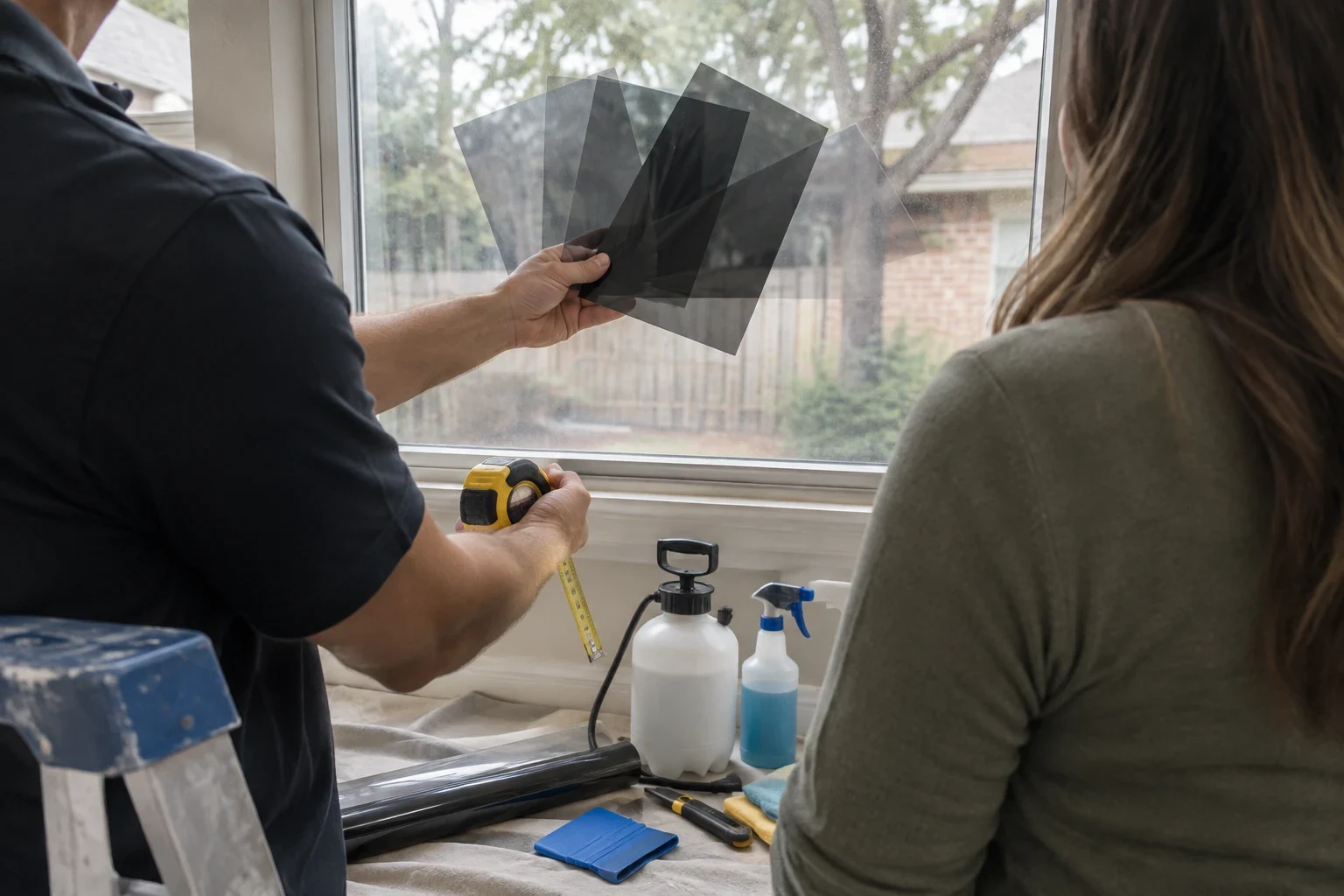
We bring samples of solid frosts, dusted crystal looks, gradients that fade from opaque to clear, and line or pattern designs. You hold them against your actual window in your actual light, since a frost looks different on a north-facing pane than in direct afternoon sun.
Layout and partial coverage
For bands, borders or a frosted lower half, we measure and mark the cut line so it sits level with the muntins or the counter height. Partial coverage often solves the privacy problem with less film.
Prep and old film removal
Existing film, paint specks and mineral spots come off with a razor scraper and cleaner. Debris trapped under decorative film shows as a bright dot, so prep matters more here than with clear tint.
Wet application and edge trimming
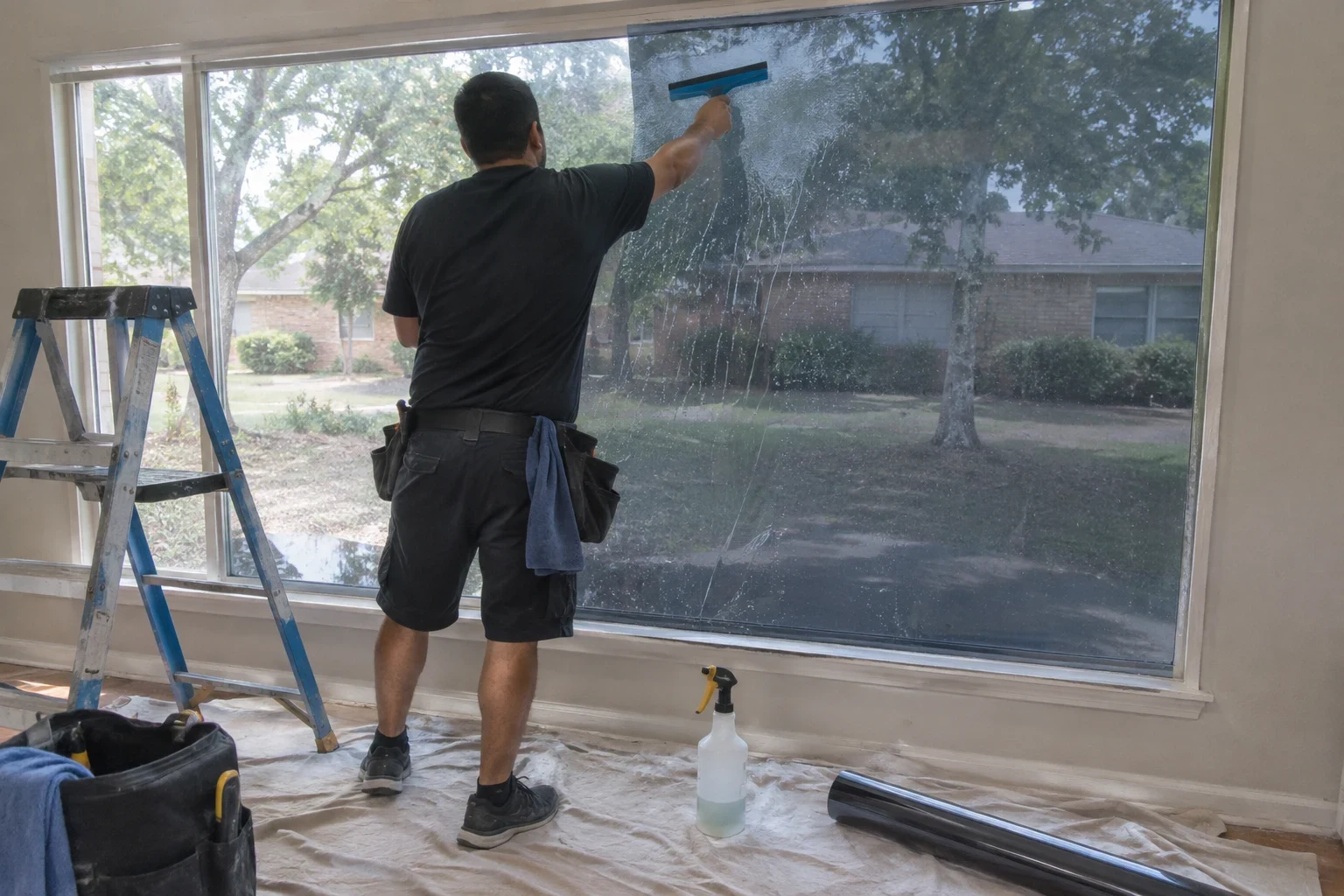
Film goes on over a slip solution, is squeegeed out from the center and trimmed with a small gap at the gasket so the edge does not lift as the frame moves.
Signs decorative film fits your windows
- You keep the blinds shut all day
- If a bathroom or entry blind never opens, you are paying for a window and getting a wall. Film keeps the light and handles the privacy.
- The front door shows straight down the hall
- Clear sidelights let anyone on the porch see who is home and what is inside. A frost or gradient on those narrow panes closes that view without darkening the foyer.
- Glass doors get walked into
- Interior glass doors and partitions are easy to miss. A frosted band at eye level makes the glass visible and is a common fix.
- Old etched or frosted film is peeling
- Yellowed edges, bubbles or a cracked pattern mean the adhesive has failed. We strip it and start clean rather than patch over it.
- You rent or plan to change the look later
- Sandblasted or acid-etched glass is permanent. Film gives a similar finish and can be removed without damaging the pane.
How a decorative film job runs
- 1
Phone consultation
You tell us which windows bother you and why. We ask about window size, glass type if you know it, and whether you want full or partial coverage.
- 2
On-site look and measuring
We check each pane, measure, and look for things film cannot fix, such as fogging between panes from a failed insulated seal. If that is the real issue, we tell you before you spend money on film.
- 3
Choosing the film
You compare samples on the glass. We give you a written quote by pane, so you can see what each window costs and drop any you decide to leave clear.
- 4
Install day
We lay drop cloths, clean and scrape the glass, apply and trim the film. Most rooms are usable again within an hour.
- 5
Curing
Light haze or small water pockets are normal while the slip solution dries out. In humid Gulf Coast weather that can take a couple of weeks. Leave the film alone and do not clean it during that time.
What moves the price of decorative film
Decorative jobs are priced by the glass, not by a flat package. A single bathroom pane and a wall of patio doors are very different jobs. Your quote lists each window so you can see where the cost comes from.
- Square footage and pane count
- Many small panes, like divided-lite sidelights, take more cutting and trimming time per square foot than one large sheet.
- Film style
- A plain frost is the simplest. Gradients need careful alignment across panes, and custom-cut patterns or lettering add plotting and weeding time.
- Glass condition and old film
- Stripping aged film and its adhesive can take longer than the new install, especially on panes where the old layer has baked on.
- Access
- Transoms over doors, stairwell windows and glass above tubs need ladders or staging and slow the work down.
Decorative window film questions
- Can people see in at night with frosted film?
- No, not clearly. A frost scatters light in both directions, so with the lights on inside, people outside see a glow and vague shapes at most. That is the main reason to choose it over a mirrored film for bathrooms.
- Will decorative film keep the room cooler?
- Not by much. Most decorative films are made for appearance and privacy, not heat rejection, though they do block a good share of UV. If heat is the bigger complaint, ceramic window film is the better fit, and we can talk about which windows need which.
- Does it work on textured or rain glass?
- Film needs a smooth surface to bond. Many textured panes have one smooth side, and if that side faces the room we can usually apply there. If both sides are textured, we will tell you it is not a good candidate.
- Can it be removed later without ruining the glass?
- Yes. Decorative film peels off, and any adhesive left behind comes off with a solvent and a razor scraper. Removal is easier when the film has not been in direct sun for many years.
- How do I clean it once it has cured?
- Use a soft cloth or rubber squeegee with mild soapy water. Skip ammonia cleaners and abrasive pads, which can dull the surface or scratch the pattern.
Show us the window that bothers you
We will check the glass, show you samples in your own light and tell you which panes really need film. The consultation and quote cost nothing.