ServicesNon-Reflective Window Film
Non-Reflective Window Film in West University Place
Non-reflective window film cuts heat, glare and UV while keeping your glass looking like glass, with no mirrored exterior and no dark reflection at night. We check your windows and sun exposure first, then match a film to the real problem.
Heat and glare control that doesn't look like tint
Most traditional heat-control films work by bouncing sunlight off a metallic layer, which is why they look like a mirror from the street. Non-reflective films take a different route. They use ceramic or carbon particles in the film to absorb and reject infrared heat, so visible reflectance stays close to that of plain glass.
That matters if you like your view at night, if your neighborhood frowns on mirrored windows, or if you simply want rooms that feel cooler without looking darker. It is often the right call for front-facing windows, living areas with big picture glass and older homes where a shiny exterior would look out of place.
Before we recommend anything, we work out where the heat or glare is actually coming from. A west window taking afternoon sun calls for a different film than a room that is warm because a dual-pane seal has failed, and film will not fix the second one.
What the work includes
Window and exposure check
We note which way each window faces, when it takes direct sun and what is causing the complaint: heat, glare, fading or all three.
Glass identification
We confirm whether each pane is single, dual-pane, tempered or already low-E. Film absorbs some energy, so the glass type decides which films are safe to apply without thermal stress.
Side-by-side samples
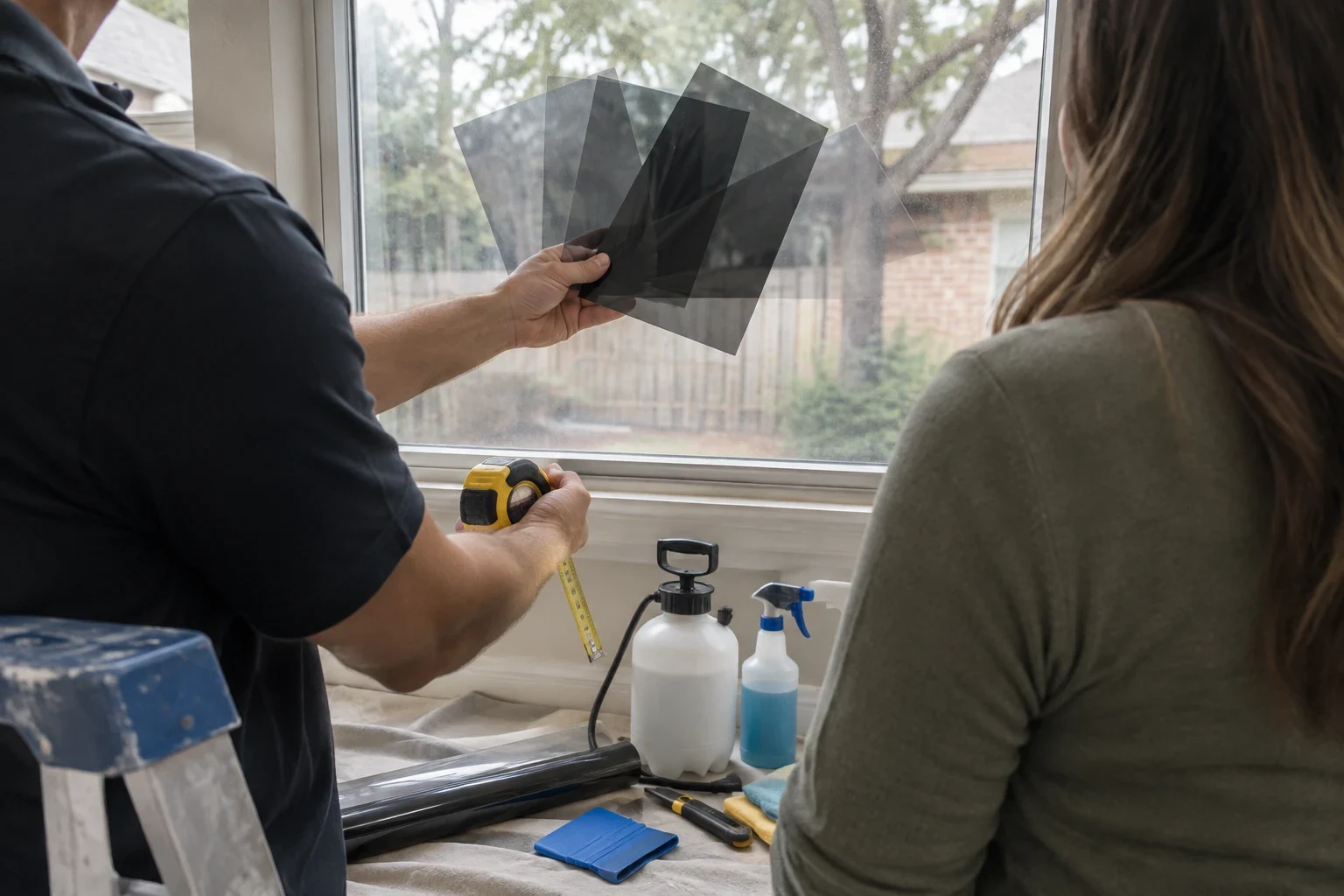
We hold film samples on your actual glass so you can judge the shade and clarity in your own light, not from a brochure.
Clean, precise installation
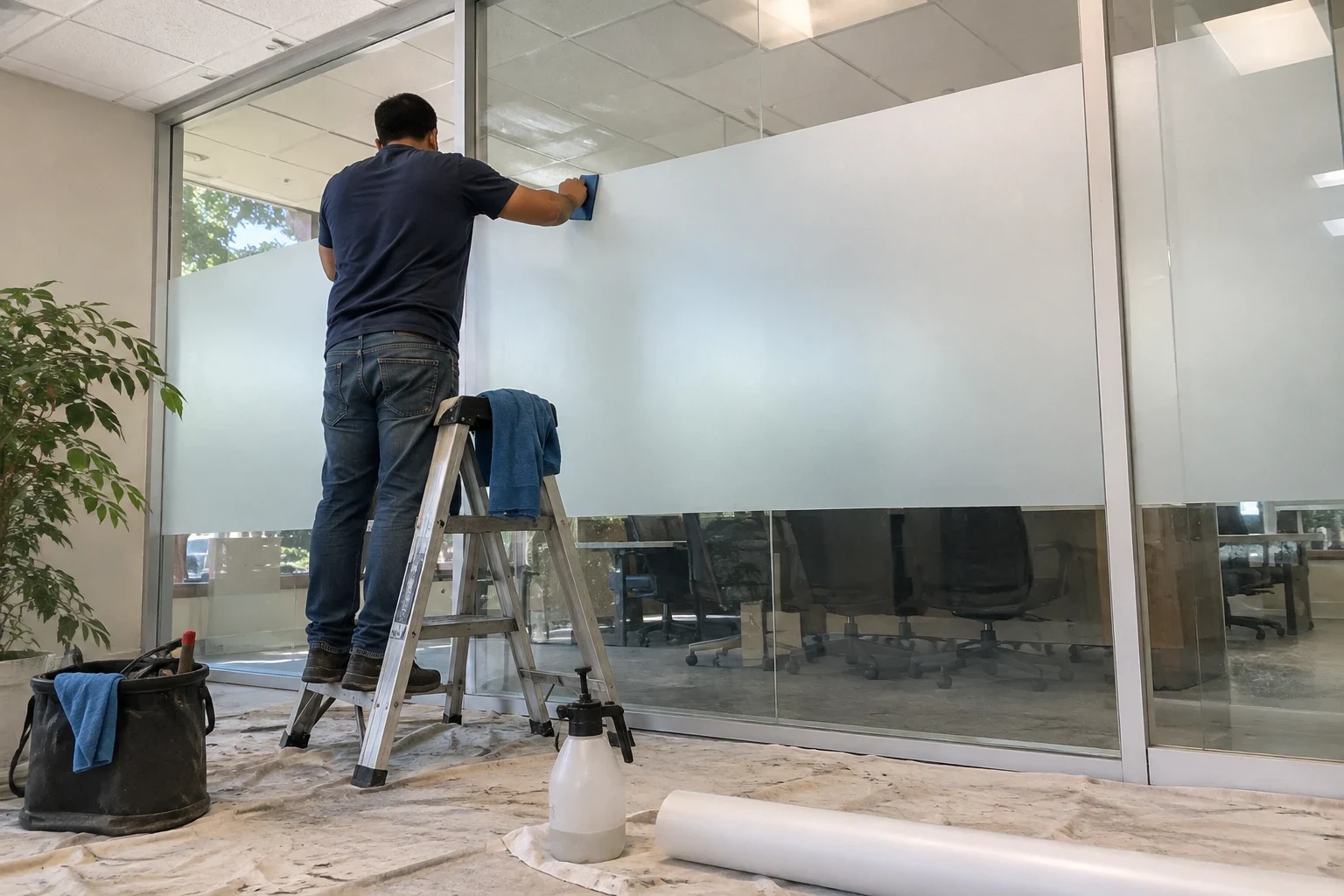
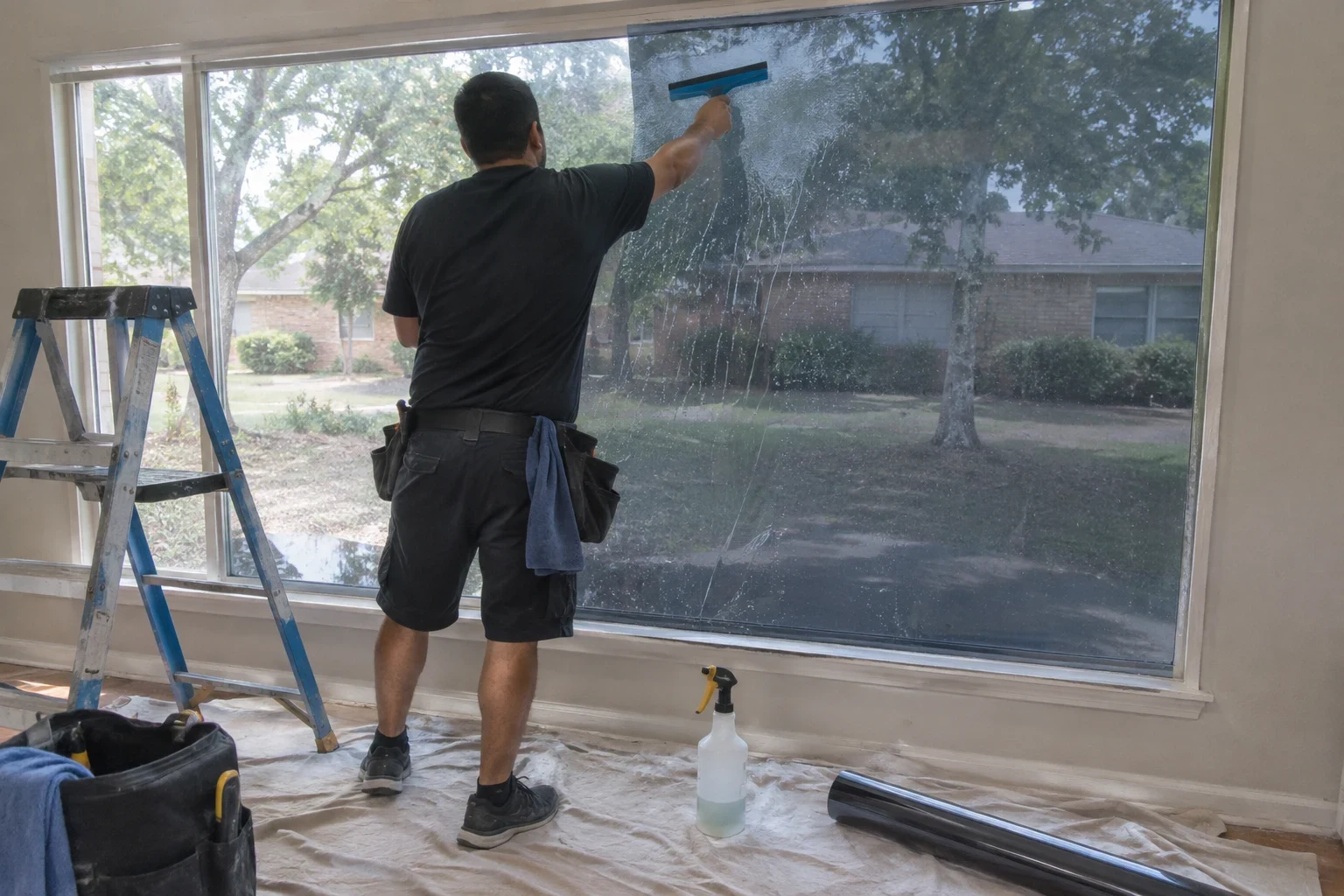
Glass is scraped and cleaned, film is cut to fit and squeegeed out, and edges are trimmed with a small gap at the gasket so the film does not lift.
Furniture protection and cleanup
We move what needs moving, lay drop cloths under each window and leave the room as we found it.
Signs non-reflective film is the right fit
- You disliked mirrored tint
- If you have seen reflective film turn windows into mirrors at night, a low-reflectance film keeps your view out after dark.
- Afternoon rooms run hot
- West and south windows take long hours of Houston-area sun. Infrared-rejecting film cuts that heat at the glass without dimming the room much.
- Glare on screens and floors
- Bright patches on a TV, monitor or polished floor point to direct sun at a low angle. A light non-reflective film reduces glare while keeping daylight.
- Fading rugs and wood
- UV is a major driver of fading. Most quality films block nearly all UV even in very light shades.
- Exterior appearance rules
- Some HOAs and deed restrictions limit mirrored glass. A non-reflective film keeps the outside of the house looking unchanged.
How a job runs
- 1
Phone consultation
You tell us which rooms bother you and when. We ask about window age, glass type and any fogging between panes so we arrive with the right samples.
- 2
On-site diagnosis and measuring
We check each window's exposure and glass, measure every pane and show samples in place. You get a written, line-item quote.
- 3
Installation day
Most homes take a single day. We protect floors and sills, clean each pane, install and trim the film, then wipe down frames and glass.
- 4
Curing
Small water pockets or a slight haze are normal and dry out as the adhesive cures, usually faster in sunny weather. We ask that you wait about 30 days before washing the inside of the glass.
What affects the price
Non-reflective film is priced by the window and the film, not by a flat package. Your quote lists each window, the film chosen for it and any prep work so nothing shows up later.
- Film construction
- Ceramic and nano-carbon films cost more than dyed films because they reject infrared heat without darkening the glass or fading over time.
- Number and size of panes
- Total square footage drives material, but many small divided panes take more labor than one large sheet.
- Access
- Tall stairwell windows, transoms and glass behind built-ins need ladders or extra setup time.
- Old film removal
- Peeling or bubbled film has to be steamed and scraped off, and old adhesive cleaned before new film goes on.
Non-reflective film questions
- Does non-reflective film block as much heat as mirrored film?
- Good ceramic films come close, and some match a mid-range reflective film. They absorb and reject infrared instead of bouncing visible light. If maximum heat rejection matters more than appearance, we will show you how our Reflective Window Film compares on the same window.
- Will my windows look tinted from the street?
- Light non-reflective films are hard to spot from outside. Darker shades look slightly gray but never shiny. Seeing samples on your own glass is the best way to judge.
- Can it go on dual-pane or low-E windows?
- Usually yes, but not every film suits every pane. Film raises the temperature of the glass a little, so we match absorption levels to the glass type and sun exposure. If a pane is fogged between the layers, the seal has failed and we will tell you that film is not the fix.
- Will it give us daytime privacy?
- Not much. Non-reflective films are built to stay clear, so people can see in about as well as before. For privacy, our Privacy Window Tinting or Decorative Window Tinting pages cover frosted and darker options.
- How do we clean the film?
- After the cure period, use a soft cloth or rubber squeegee with mild soapy water. Skip ammonia cleaners and anything abrasive, which can scratch or cloud the surface.
Find out which film your windows need
Tell us which rooms run hot or glare at the wrong time of day. We will check the glass and sun exposure and give you a written quote.