ServicesOffice Window Tinting
Office Window Tinting in West University Place
Screen glare, a conference room nobody wants after 2 p.m., blinds that never open. We find which panes cause the trouble and why, then install window film matched to that glass and that exposure, so your staff gets daylight without squinting or sweating.
Film chosen for the problem, not the catalog
Office window tinting is a thin polyester film, applied to the inside of the glass, that controls how much visible light, infrared heat and UV passes through. The right film can cut glare on monitors, lower solar heat in perimeter offices and keep the view intact. The wrong one makes a room dim, looks mismatched from the street, or puts stress on glass that was never a good candidate.
That is why we start by finding the actual cause. Glare on a screen may come from low direct sun, or from light bouncing off a parked car or a neighboring building's glass. Heat may come through clear single-pane glass, or the real issue may be a failed seal in an insulated unit. Each one points to a different film, and sometimes to no film at all on certain panes.
If your project is a storefront or a whole building, our commercial window tinting page covers that work. This page is about the rooms where people sit at desks all day.
What an office tinting job includes
- Window-by-window survey
- We note each pane's orientation, size, glass type and the time of day the problem peaks. A west-facing office and a north-facing break room rarely need the same film.
- Glass compatibility check
- We identify annealed, tempered, dual-pane and low-e glass before recommending anything. Darker or more absorptive films raise glass temperature, and on some insulated units that increases the risk of thermal stress cracking. We tell you which panes are a fit and which are not.
- Film matched to the task
- Options include ceramic film for heat rejection with little change in appearance, neutral or dual-reflective film for strong glare reduction, and frosted privacy film for conference rooms and glass partitions. Nearly all of them block over 99 percent of UV, which slows fading of carpet and finishes.
- Careful work around desks and equipment
- We cover sills and nearby electronics, keep slip solution off keyboards and cabling, and plan the order of rooms around your meetings.
- Clean edges and cure guidance
- Film is trimmed with a small, even gap at the frame so it does not lift at the gasket. Before we leave, you get plain instructions on cure time and cleaning.
Signs your office needs window film
Blinds stay closed all day
If the only way to read a screen is to shut out the view and turn on overhead lights, glare control film lets you open the blinds again.
Perimeter offices run hot
When rooms along the glass are several degrees warmer than the core, solar heat gain through the windows is usually the cause, and the HVAC works harder to keep up.
Glare moves across the room
A bright patch that travels across desks over the afternoon points to direct low sun. Under the long Texas summer, west and south exposures take the worst of it.
Fading carpet, furniture or artwork
UV and visible light break down dyes and finishes. Bleached spots near windows mean the damage is ongoing.
Conference rooms feel exposed
Glass walls and street-facing windows can show screens and whiteboards to anyone walking by. Privacy or decorative film adds cover without blocking the light.
How the work runs
- 1
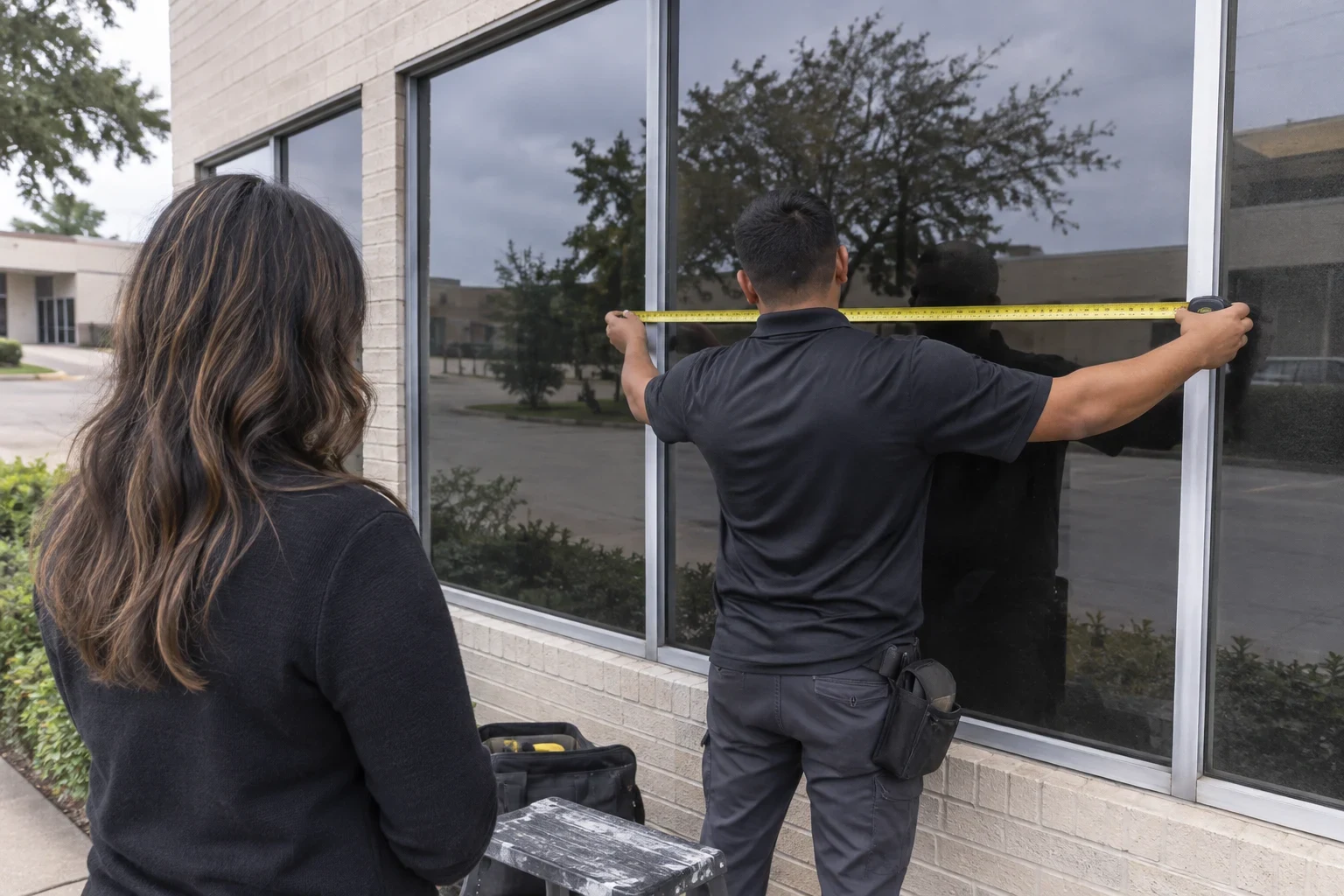
Walkthrough and measurements
We visit, look at the glass, ask when and where the complaints happen, and measure each pane. This is where we separate glare from heat from privacy, since one office often has all three in different rooms.
- 2
Recommendation with samples on your glass
We hold film samples against your actual windows so you can see the tint level and reflectivity in your own light. You get a written, line-item estimate that lists film type by window.
- 3
Prep
We clean each pane, scrape off paint specks and debris that would show as bubbles, and protect the sill and anything below the window.
- 4
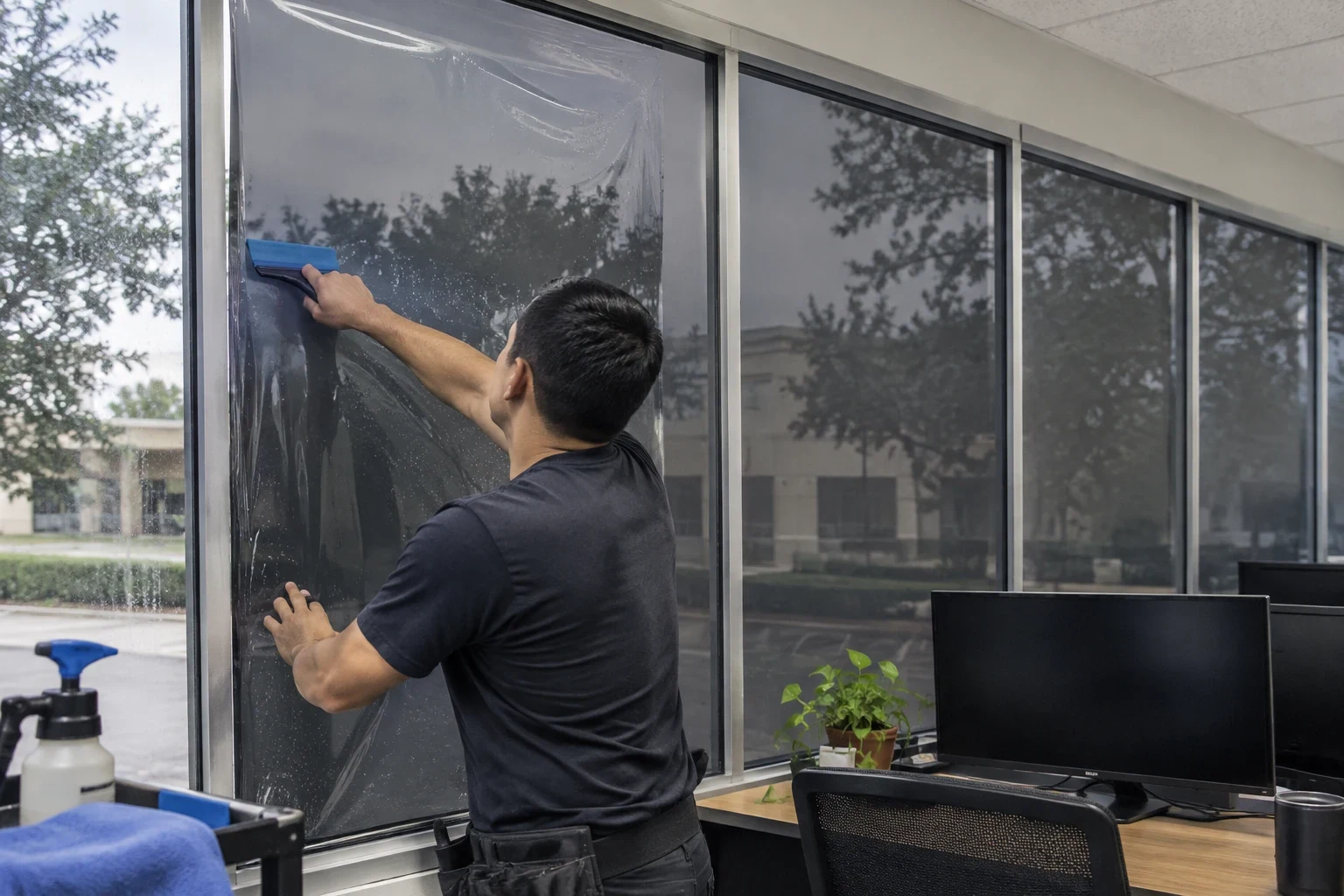
Installation
Film goes on wet with a slip solution, is positioned, squeegeed from the center out to push out water, and trimmed at the edges. Most rooms can be back in use the same day.
- 5
Final check
We walk each room with you, look for edge lift or contamination, and explain the cure period. A slight haze or small water pockets are normal for a few weeks while moisture dries through the film.
What moves the cost of office tinting
Office projects are priced by the glass, not by the room count. Your quote by phone or after the walkthrough reflects what we actually find on site. These are the factors that change it most.
- Square footage and pane count
- Total film area drives material cost, but many small divided panes take more labor than a few large ones of the same area.
- Film type
- Ceramic film and high-performance spectrally selective films cost more than standard dyed or reflective films. Frosted and decorative films vary with the pattern.
- Access
- Tall clerestory windows, glass behind fixed shelving or built-ins, and panes that need a ladder or lift add time.
- Removing old film
- Failed film that is bubbling, purple or peeling has to be stripped and the adhesive cleaned off before new film goes on.
- Scheduling around your business
- Working room by room around meetings, or outside normal hours, can change how the job is staged.
Office window tinting questions
Something not covered here? (713) 903-7407
Will window film make our office too dark?
Not if the film is chosen for the problem. Ceramic and spectrally selective films reject a large share of heat while letting most visible light through. If glare is the main complaint, a moderately darker film helps, and we show samples on your glass first so nobody is surprised.
Can staff keep working while you install?
Usually, yes. We work one room or one run of windows at a time and keep the noise low, since the job is mostly cleaning, squeegeeing and trimming. Rooms with sensitive equipment we plan around with you ahead of time.
Is film safe on our dual-pane or low-e windows?
Many insulated and low-e units take film without trouble, but not every film suits every unit. Absorptive films raise glass temperature, so we identify the glass type and exposure before recommending anything. If a pane is a poor candidate, we tell you and suggest an alternative.
We lease our space. Do we need approval?
Often, yes. Many buildings have rules about how the glass looks from outside, especially reflectivity. We can give your property manager the film specifications so the request is clear before work starts.
Will it lower our energy bills?
Film reduces solar heat gain, which eases the cooling load on rooms along the glass. How much that shows up on the bill depends on orientation, glass type and how your HVAC is zoned, so we explain the expected effect for your windows instead of quoting a blanket figure.
Find out what your office glass actually needs
Tell us which rooms are hot, glary or too exposed, and we will walk through the likely causes on the phone. The consultation and quote are free, and serve offices in West University Place, Bellaire and Houston.