ServicesHome Window Tinting
Home Window Tinting in West University Place
Before we suggest a film, we look at why a room runs hot or bright: the glass type, any existing low-E coating, and the angle of the afternoon sun. Then we install window film that fixes that cause without risking your glass.
What home window tinting actually fixes
Window film is a thin polyester laminate applied to the inside face of the glass. Depending on its construction, it rejects infrared heat, blocks up to 99 percent of UV, cuts glare, or adds daytime privacy. Different films do those jobs very differently, so the right one depends on the problem in each room.
A bedroom that bakes at 4 p.m. usually needs infrared rejection on a west window, not a darker shade. A living room where the rug is fading needs UV protection, which even a nearly clear film can give. Picking film by darkness alone is the most common reason people end up unhappy with tint.
That is why we start with the glass and the exposure. Dual-pane units, low-E coatings and large annealed panes all limit which films are safe to use, and we check for them before anything is quoted.
What the work includes
Glass and seal check
We identify single or dual pane, tempered or annealed, and whether a low-E coating is already present. We also look for failed seals, which show as fogging between panes, since film will not fix that.
Sun exposure review
We note which windows take direct afternoon sun and which only get glare off a driveway or pool. Each window gets the film it needs, not one product for the whole house.
Film recommendation with samples
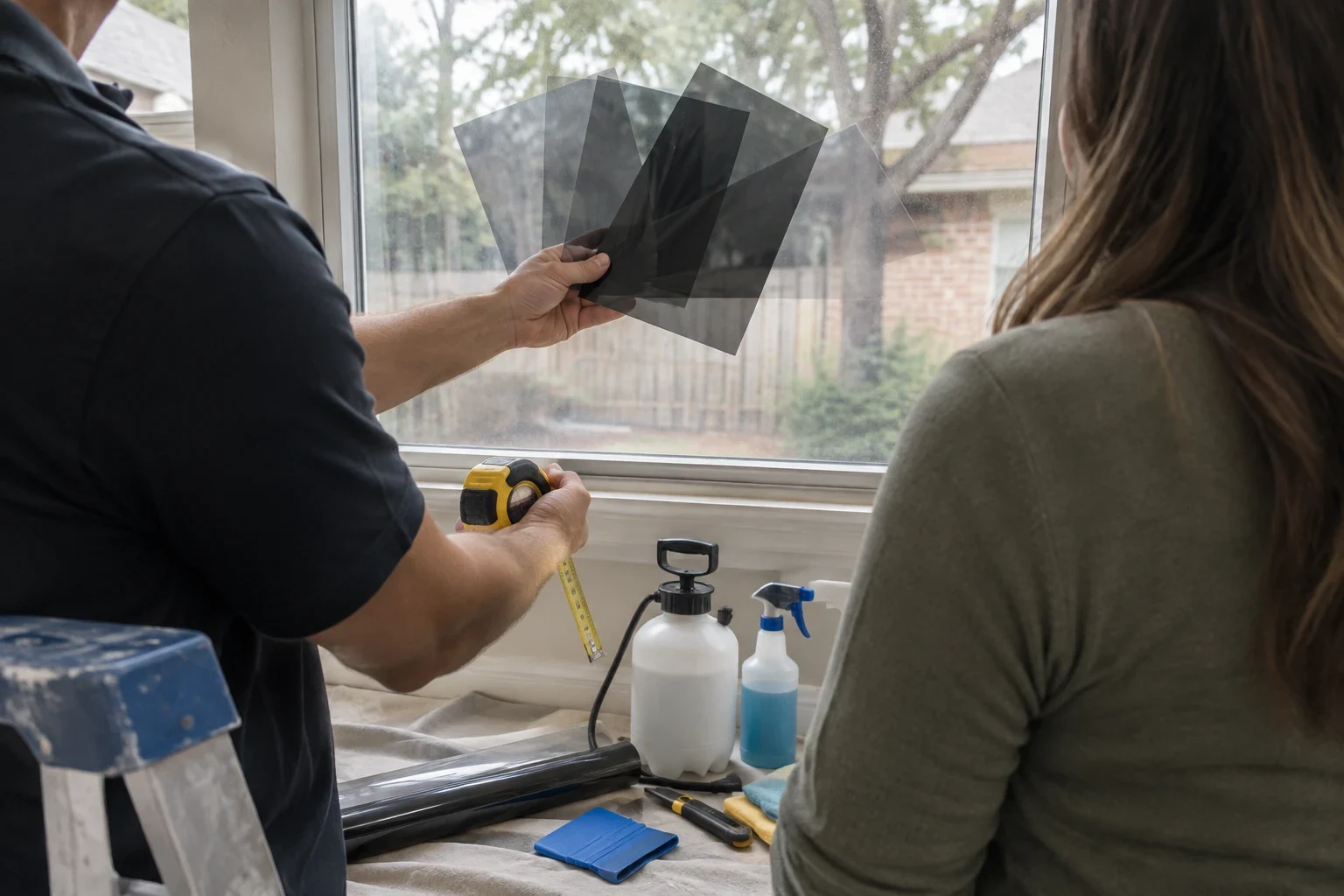
We hold sample pieces against your actual glass so you can see the shade and reflectivity from inside and outside. Options range from ceramic film to dual-reflective and spectrally selective films.
Installation and edge finishing
Film is cut to leave a small gap at the gasket so it can shed water as it cures. Edges are sealed down to keep them from lifting.
Cleanup and care notes
We wipe down sills and frames and remove all trimmings. You get plain instructions on curing time and how to clean the film.
Signs your windows are ready for film
- One room never cools down
- If the AC runs hard but one room stays several degrees warmer, the glass is usually letting in infrared heat. Heat-rejecting film targets that directly.
- Faded floors and furniture
- Lighter patches on hardwood, rugs or upholstery near a window point to UV damage. A clear UV-blocking film stops most of it without changing the view.
- Glare on screens
- Squinting at a TV or monitor at certain hours means direct light is hitting the screen. Glare reduction film softens that light while keeping the room bright.
- Too visible from the street
- Large front windows can put your living space on display during the day. Privacy window tinting and reflective window film limit the view in.
- Hot glass to the touch
- Glass that feels warm in the afternoon is radiating heat into the room. That is a strong sign for ceramic or spectrally selective film.
How a tinting job runs
- 1
Free consultation by phone
You tell us which rooms bother you and when. We ask about window age and orientation so we arrive with the right samples.
- 2
On-site diagnosis
We test the glass, check coatings and seals, and measure each pane. You get a written estimate listing the film for each window and why we chose it.
- 3
Prep and install
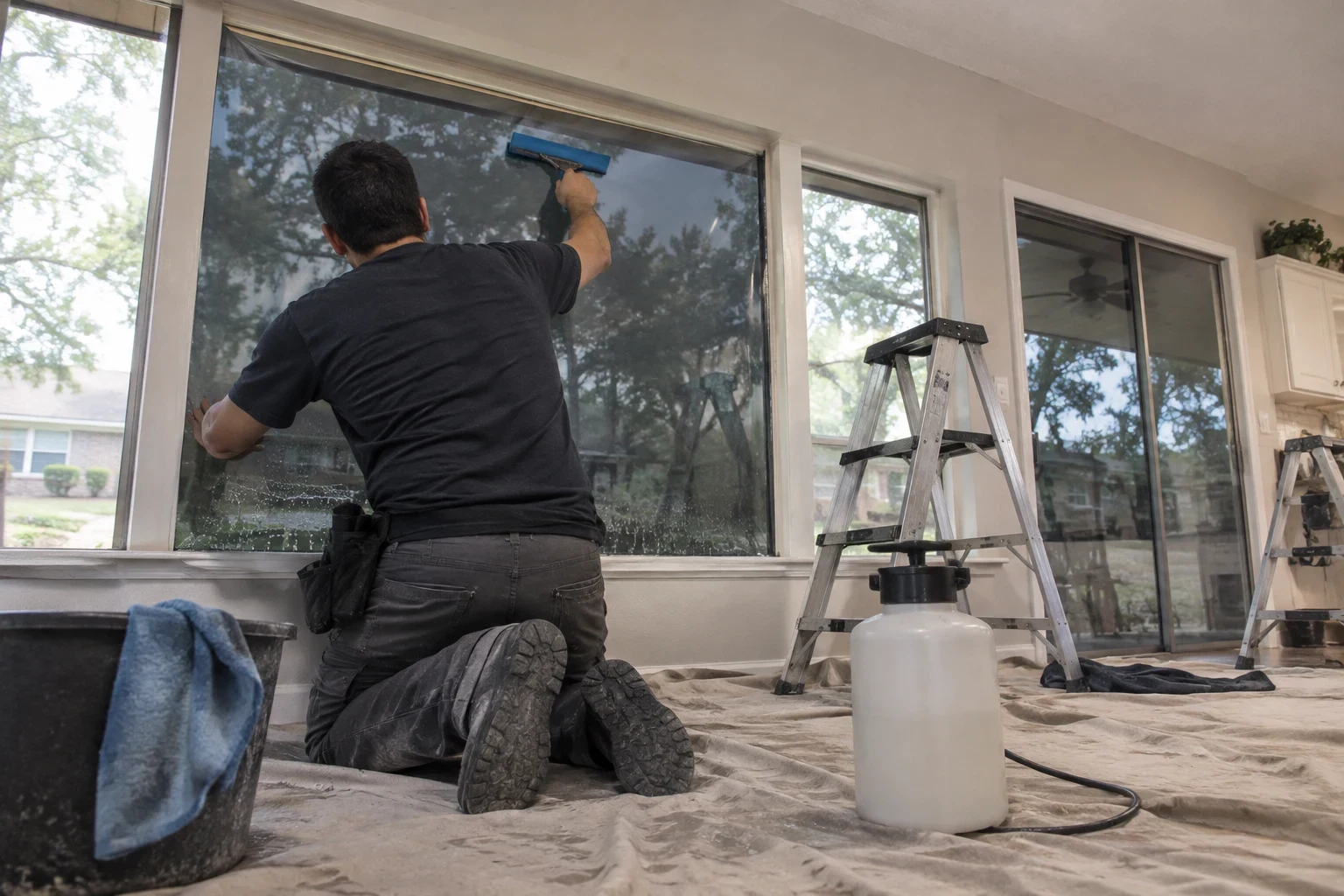
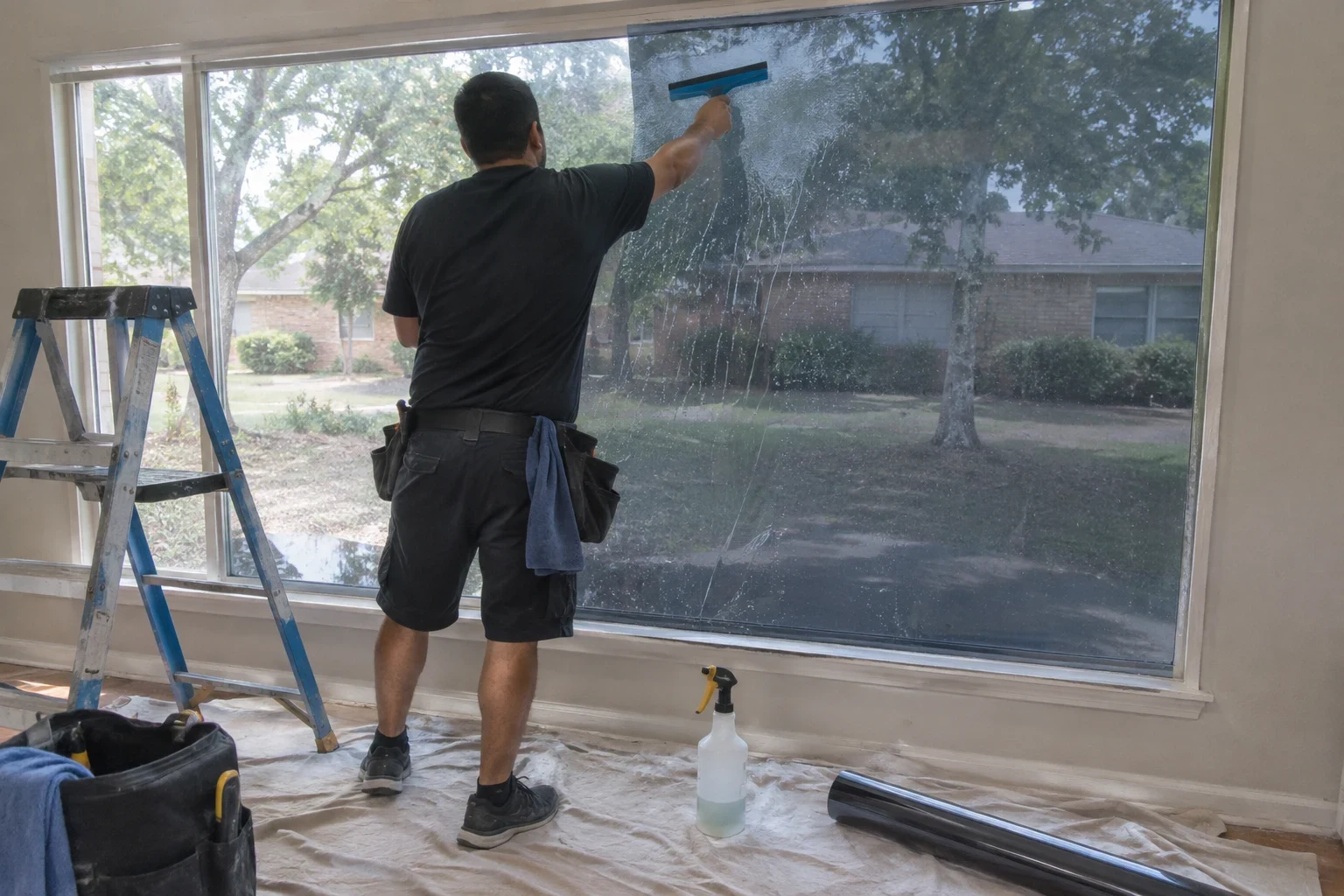
We lay drop cloths, move nearby items, and clean every pane with a razor scraper to remove grit. Film goes on with a slip solution and is squeegeed flat from the center out.
- 4
Curing and walkthrough
We walk each window with you before we leave. Light haze or small water pockets are normal and clear as the adhesive cures, which can take a few weeks in cooler weather.
What moves the cost of home window tinting
Price depends far more on the film and the windows than on the number of rooms. After the on-site check, we give you a written estimate by window so you can see where the cost comes from and drop anything you do not need.
- Film type
- Dyed and basic reflective films cost less. Ceramic and spectrally selective films cost more because they reject heat without darkening the glass.
- Glass size and count
- Total square footage drives material and labor. Many small divided panes take longer than one large pane of the same area.
- Access
- Second-story windows, tall transoms and glass behind built-ins need ladders or extra setup time.
- Removing old film
- Bubbled or peeling tint must be steamed and scraped off before new film goes on, which adds labor.
Home window tinting questions
- Can film crack my dual-pane windows?
- It can if the wrong film is used. Dark, heat-absorbing film raises glass temperature and can stress the inner pane or seal. We check your glass first and only recommend films rated for that type of unit.
- Will tinted windows make my rooms dark?
- Not necessarily. Ceramic and spectrally selective films reject a large share of heat while staying close to clear. We show you samples on your own glass before you decide.
- Do I already have low-E glass, and does that matter?
- Many homes do, and we test for it during the visit. Low-E glass already blocks some heat, so we pick a film that adds to it rather than duplicating it or overheating the pane.
- Can people see in at night?
- Reflective film gives daytime privacy, but at night with lights on inside, the effect reverses and people can see in. If night privacy matters, we will talk through frosted or decorative window tinting for those windows.
- When can I clean the windows?
- Wait about 30 days so the adhesive fully cures. After that, use a soft cloth and an ammonia-free cleaner. Avoid abrasive pads on the film side.
Find out what your windows need
Tell us which rooms run hot, bright or faded. We will come check the glass and give you a written estimate with the right film for each window.